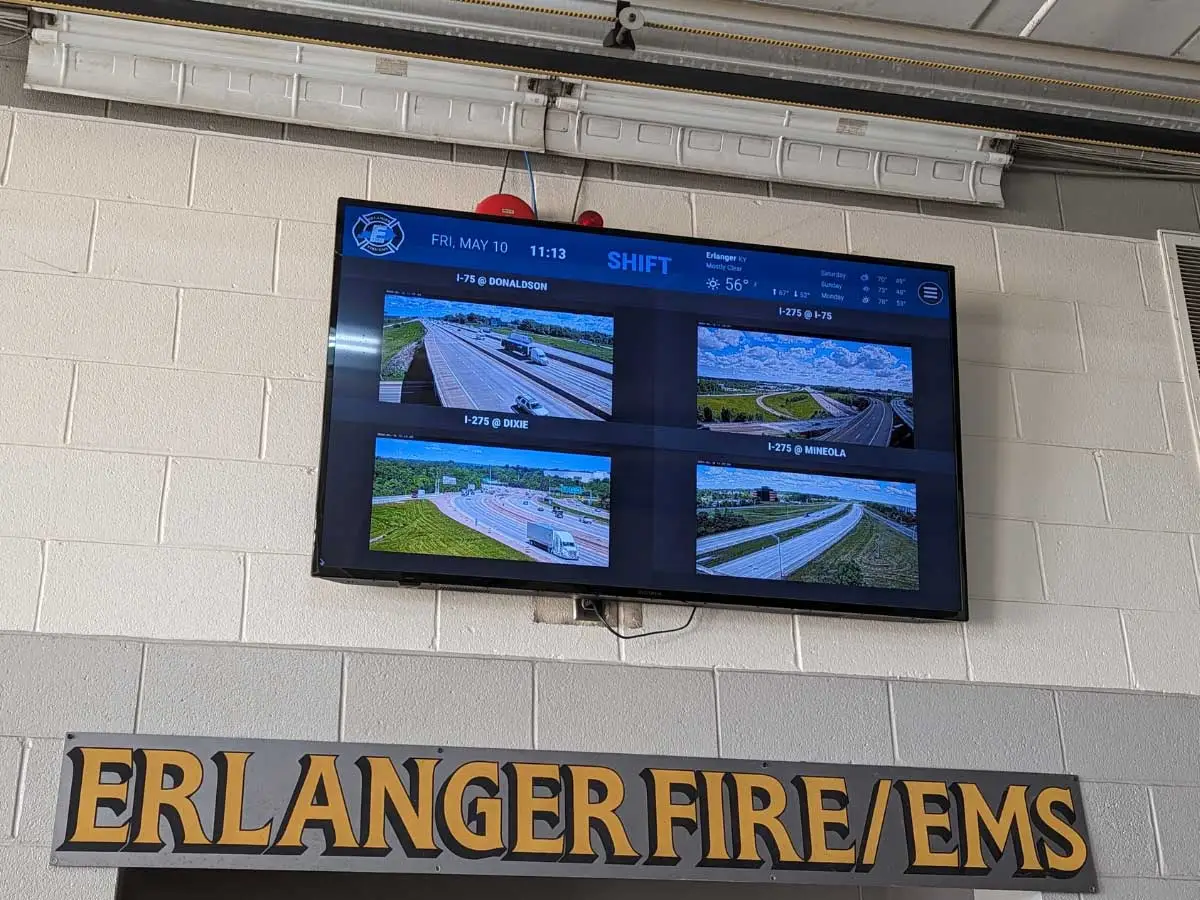
The Erlanger (KY) Fire/EMS Department has had dashboard technology by First Arriving long enough to see the options expand over the years, and to tweak their system several times over as they optimize it for their specific use. The department is in a unique position as early adopters of the technology, having first implemented their system before First Arriving existed in its current form.
“We’ve been customers for a pretty long time,” said Assistant Chief Dave McQuerry, who estimates their use at about 10 years. They got involved through a member of their department who was a developer, he said, who then connected them with a First Arriving staff member. “It kind of took off from there, and we’ve just updated it as we’ve gone,” he said.
Their immediate intent was to solve communication issues, McQuerry said, and they liked the concept of doing that by showcasing and passing along messages by placing them on the dashboard’s large screen, where everyone in the department could easily see them.
The department, with two stations and 33 full time personnel, notably became a technology leader in their area when several neighboring departments took notice of their dashboard system and followed suit. “We’ve talked to some other departments about how we’ve used it and a few others have come onboard from there,” McQuerry said.
Some things about their system have stayed consistent over time, including their ongoing use of Google Spreadsheets to post the messages and information they want to get out to members, McQuerry said. This came to include posting their mandatory overtime spreadsheet, so that members can see updates to the document in real time, and everybody knows who’s currently at the top of the list.
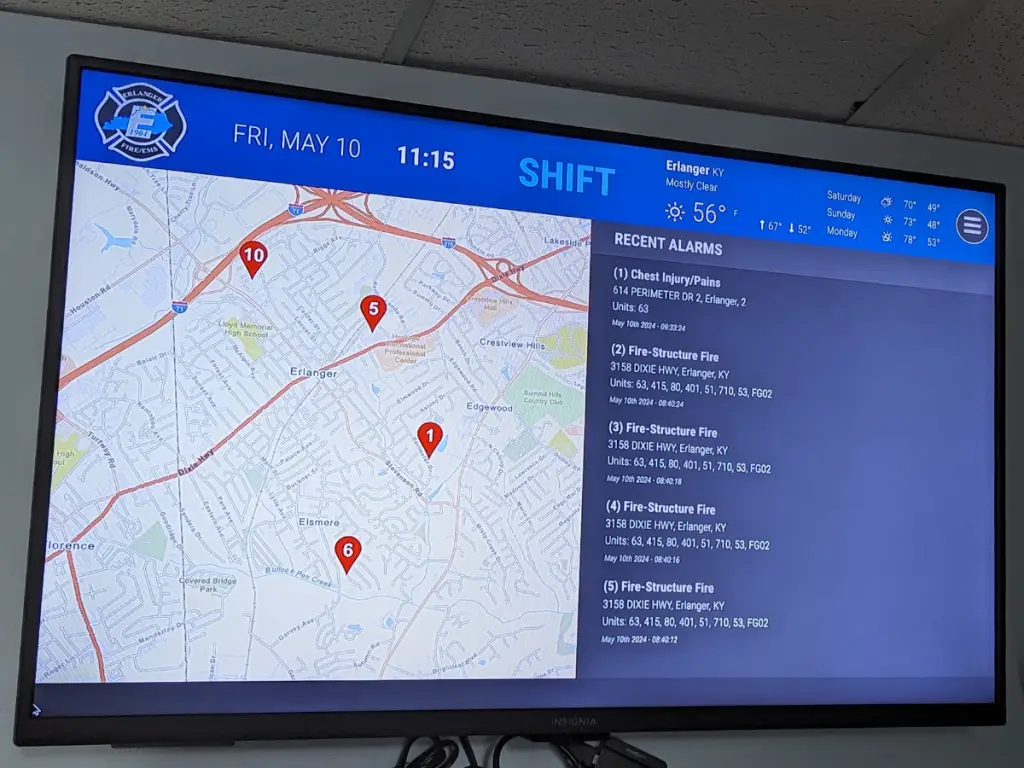
Their other longtime standby has been Active 911. “We integrated with Active 911 right away,” McQuerry said. “That was one of our first things. So if we get a call it kind of takes over the board and shows the run up on the screen, and everybody gets to see that. So that’s been helpful and something that we’ve used since the beginning.”
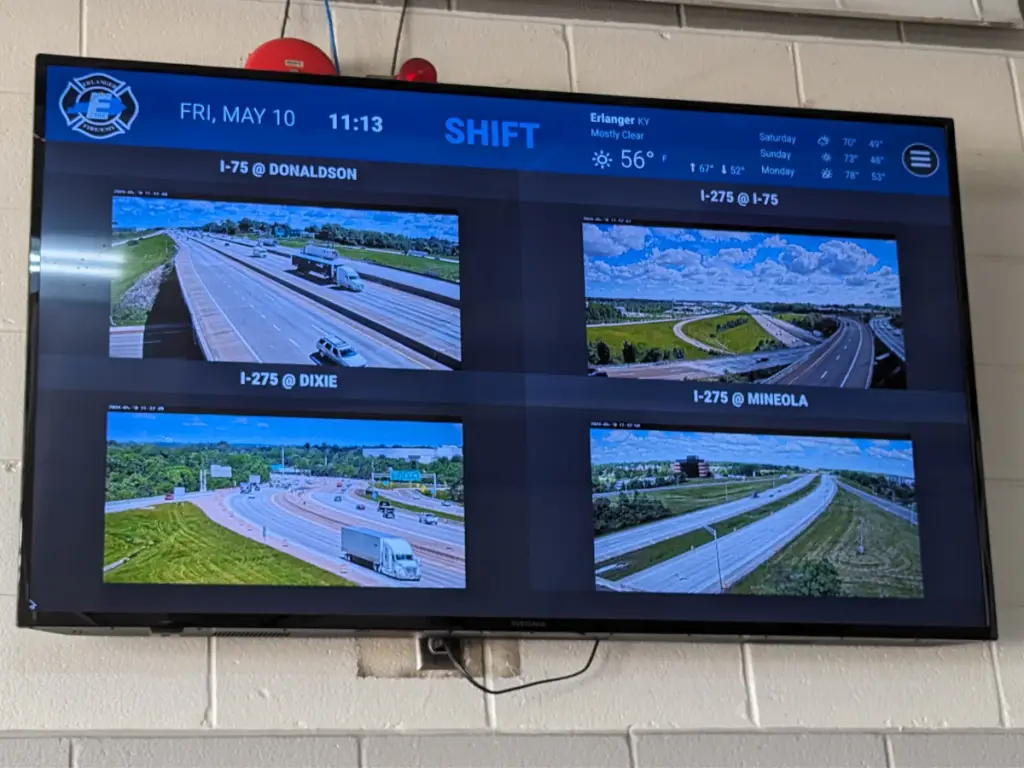
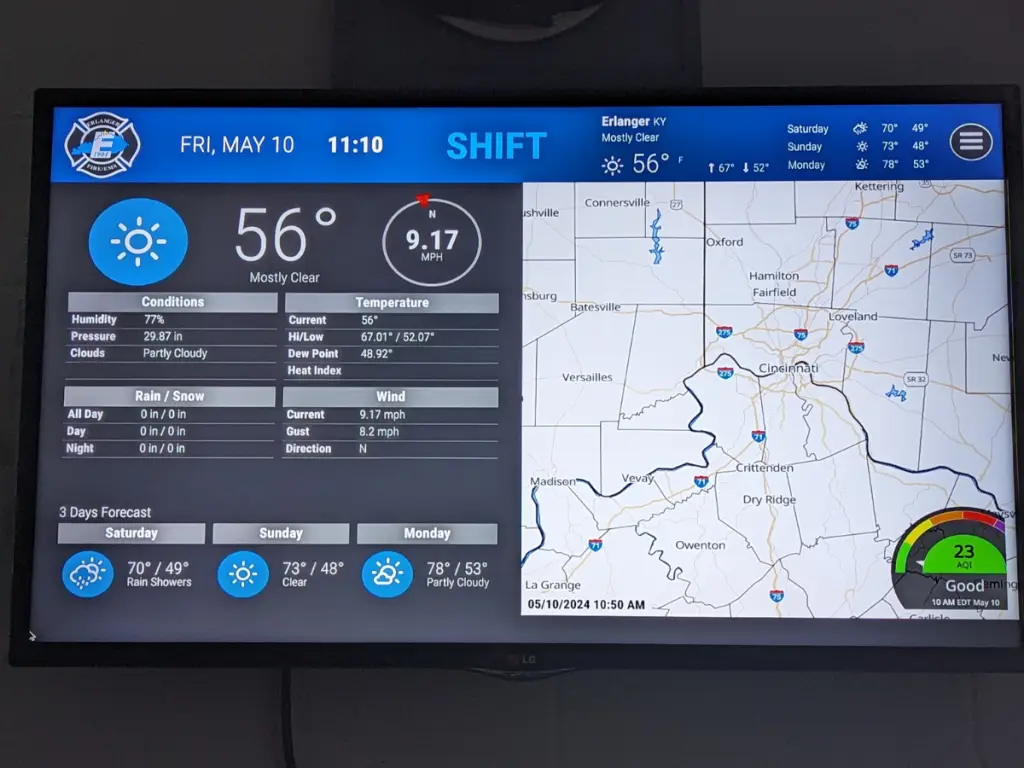
However, while some things have stayed the same over the years, the department has also used their growing experience to optimize their use of the dashboards, McQuerry said, and has taken advantage of the opportunity to try different integrations and formats for how to display their digital tools.
“We’ve kind of gone through and said, hey, can we make the screens look this way, or can we get this information,” McQuerry said. “And as you guys make some improvements that we’re like hey, we’d like to try that, it’s been easy to work with you guys to give us what we want it to look like on our screens.”
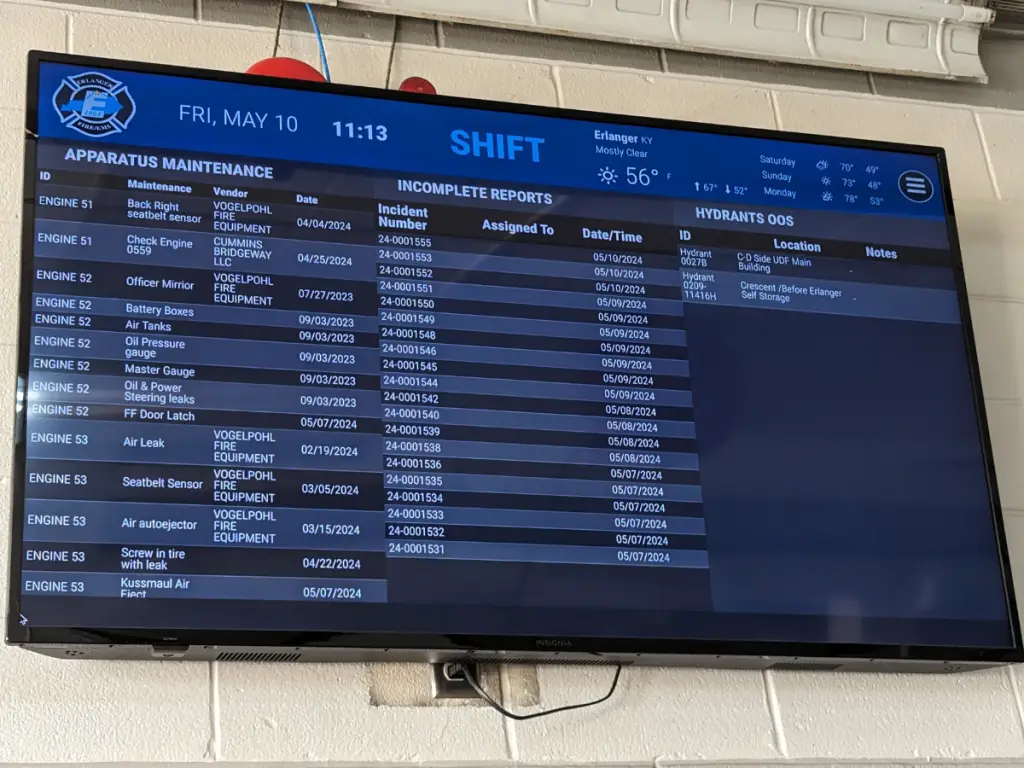
Additional benefits over the years have included a feel of increased transparency, McQuerry said, as the department is better able to share its information. It has also seen increased efficiency since using the boards to assign fire reports. “By putting somebody’s name up there, it’s not going a week without being entered in,” McQuerry said. “It’s the next day or next shift. They’re coming in, they see their name up there, it’s coming down.”
Though the department did not initially implement the dashboards to share metrics, that has been a recent change. “Just this past year we started to put our turnout times up on the boards,” McQuerry said. They now post those once a quarter, he said, and have since seen improvement. “I think being able to display those turnout times has helped our folks to say ok, we can do better than that,” he said.
“Every department’s unique and they want to see things in their own way,” McQuerry said. “I don’t think there’s a one-size-fits-all for every fire department, but it’s easy to work with you guys to get that figured out.”
If he could give advice to additional fire departments, McQuerry said, it would be to give this type of technology a try and see how they can tailor it to their specific needs.