In today’s public safety environment, every second matters. First Arriving’s digital dashboards deliver real-time, role-specific information from over 130 integrations, presenting it in a format that’s instantly accessible on large displays, desktops, tablets and mobile devices.
To fully leverage these capabilities, agencies should focus on tracking performance metrics that have a direct impact on operational readiness and decision-making. The following five metrics are essential for optimizing response, enhancing situational awareness, and ensuring the highest levels of preparedness.
1. Response & Turnout Times
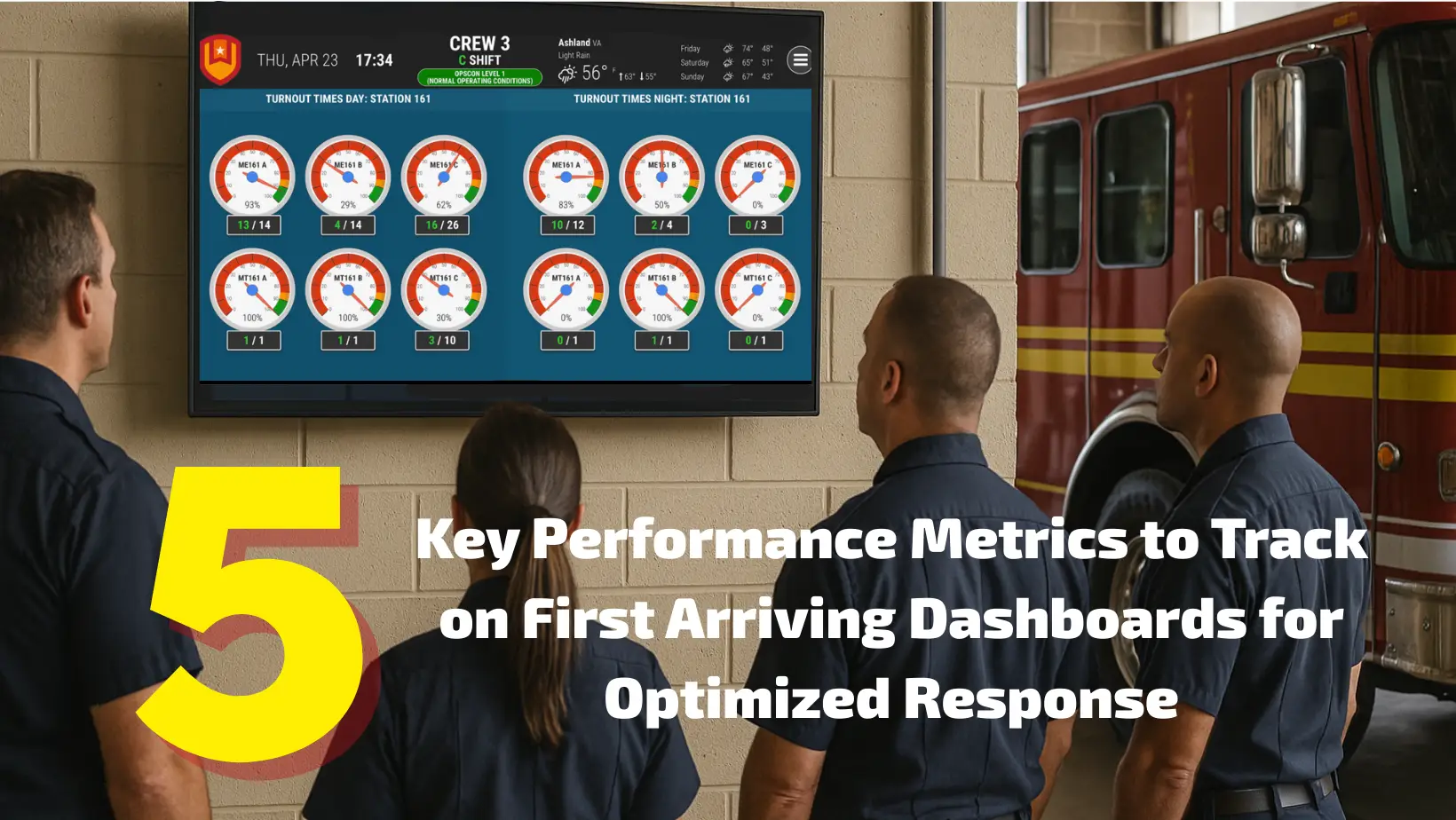
Monitoring turnout times, the interval between dispatch notification and unit departure, is critical for evaluating operational efficiency. Delays at this stage can ripple through the entire incident response. By displaying response and turnout times pulled directly from CAD or RMS systems, First Arriving dashboards help leadership identify patterns, compare shifts and pinpoint bottlenecks. For example, the Prattville Fire Department saw improved accountability and communication after implementing dashboard-based turnout tracking.
2. Fleet/Equipment Status & Availability
A response is only as effective as the resources deployed. Dashboards that show live apparatus location, readiness and maintenance status help ensure vehicles and equipment are always mission-ready. First Arriving’s platform can pull from fleet management systems to flag equipment due for inspection or out of service. This reduces the chance of discovering equipment failures and allows for proactive scheduling of maintenance before critical breakdowns occur.
3. Certification & Training Expirations
Personnel readiness depends on current certifications and ongoing skill development. From EMT licenses to hazmat credentials, lapses can sideline responders at the worst possible moment. First Arriving dashboards centralize training and certification expiration alerts, ensuring supervisors can address renewals before they become compliance issues. Departments like — have used this feature to streamline training schedules and reduce last-minute renewals.
4. Incident & Situational Awareness Alerts
Real-time awareness is a force multiplier. With First Arriving, agencies can integrate live traffic cameras, weather radar, ESRI map layers and incident timelines directly into their dashboards. This means personnel can see a storm approaching or a highway blockage before leaving the station. Such visibility enables better route planning, safer responses and quicker situational adjustments, especially during complex, multi-agency events.
5. Internal Communications & Engagement
Email fatigue is real, and in high-stakes environments, missed messages can lead to missed opportunities or delayed action. First Arriving dashboards give agencies a dynamic, visual platform for delivering shift schedules, personnel changes, recognition announcements, and reminders. Chief Josh Bingham of Prattville Fire noted that with dashboards, “We realized that nobody checks their email… now we get information in front of the right people at the right time.” This shift not only improves operational awareness but also strengthens team cohesion.
First Arriving dashboards are more than digital bulletin boards; they’re command centers for real-time decision-making. By tracking critical performance metrics such as response and turnout times, fleet readiness, certification compliance, situational alerts and internal communication effectiveness, agencies can transform raw data into actionable intelligence. The result is faster, smarter, and safer responses, delivering better outcomes for both responders and the communities they serve.