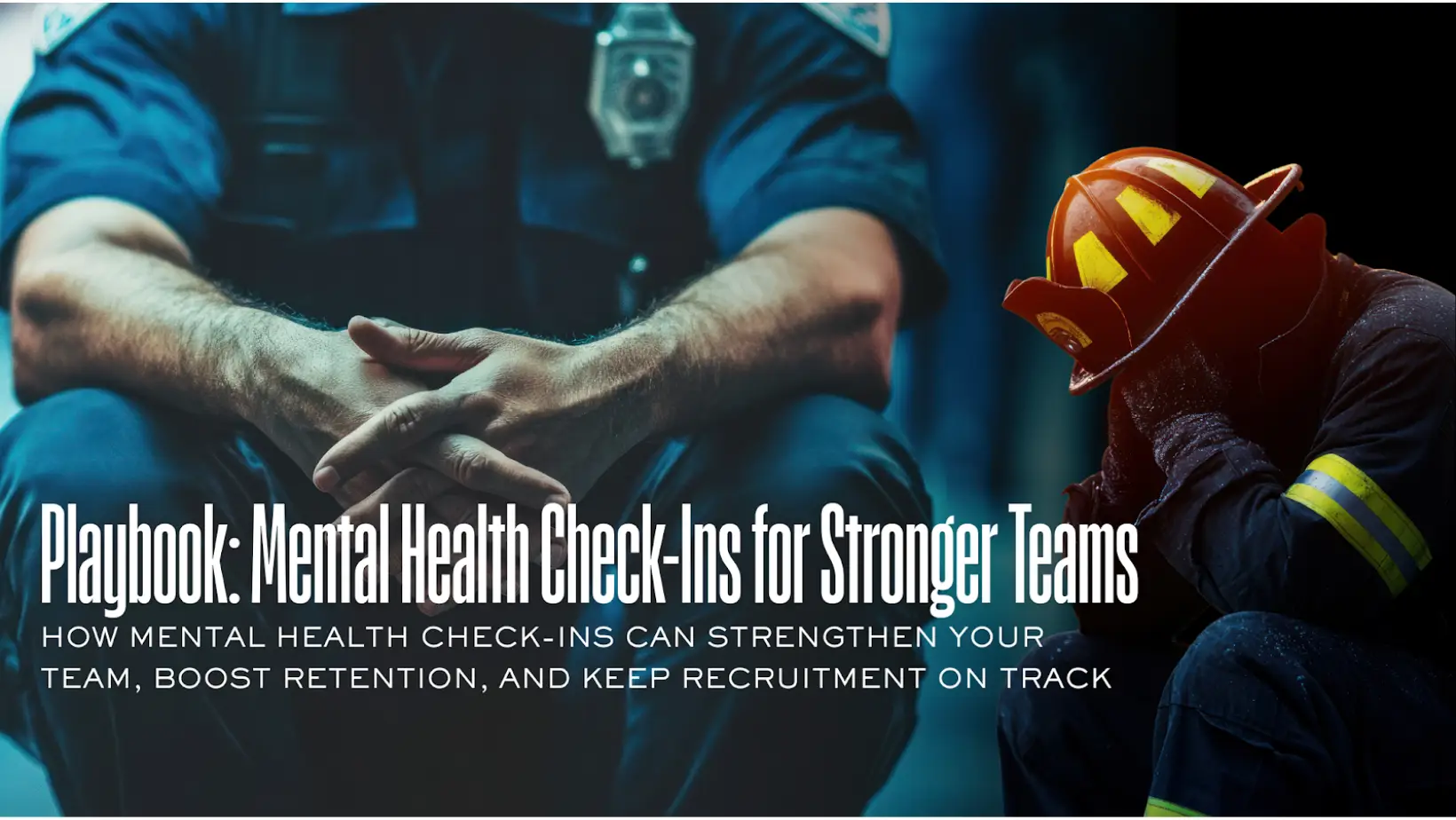
September is here, and while the pumpkin spice lattes are flowing, I want to discuss something far more important than seasonal coffee: mental health. September is Suicide Prevention Month, which makes this the perfect time to pause and really look at how your department supports the emotional and mental well-being of your people.
Public safety is tough. We can train for scenarios, drill on SOPs, and practice response plans until we’re blue in the face, but it’s a whole different game when you actually live through a traumatic incident. Whether it’s a difficult call, a tragic accident, or something that just hits too close to home, those experiences stay with your people long after the apparatus returns to quarters. This is where leadership really counts.
Pro-Tip: Don’t wait for a big event to check in. Routine mental health conversations foster a culture where your team members feel safe discussing their experiences.

As a leader, you often know when one of your people has gone through something heavy, even if they try to brush it off with a simple “I’m fine.” Don’t let that be the end of the conversation. Set up a private one-on-one. Check in a few days later. Sometimes it takes a bit of time before someone is ready to talk, and your follow-up can make the difference between them bottling up their feelings and getting the support they need.
Pro-Tip: For new members, consider pairing them with a mentor or peer supporter after major calls. This provides a natural outlet for processing their experience and helps them build trust in the department.
Think about your newer members, especially. They may not have experienced something like this before, and although they might be physically trained for it, mentally it can take a toll on them. A thoughtful check-in lets them know they’re not alone and that it’s okay to process what just happened.
Here’s the reality: people stay where they feel supported. When your team knows their leaders care about their mental well-being, it builds trust, loyalty, and a sense of belonging. That is retention gold. Conversely, if people feel like no one cares about what they’re going through, burnout and turnover skyrocket. It’s not just about saving careers, it’s about saving lives.
Highlighted Stat: In 2024, First H.E.L.P. received reports of 143 first responder suicides across the country. While this was a slight decrease from the previous year, it remains a sobering reminder that proactive mental health support is critical. (First H.E.L.P., 2024)
If your department already has mental health resources, such as peer support, chaplains, or EAP programs, ensure that everyone is aware of them. Talk about them at drills and meetings, not just when something goes wrong. Normalize the conversation so asking for help isn’t seen as a weakness.
Pro Tip: Make mental health resources easily visible. Post flyers in the day room, add them to your member portal, and mention them during roll call or shift change.
Lead by example. When leaders take time to care for their own mental health, it gives everyone else permission to do the same.
You can’t prevent every tough call or bad day, but you can create an environment where your people feel supported afterward. And that doesn’t just make them healthier, it makes them more likely to stay, grow, and lead in your department.
If you want to build a stronger culture of wellness and retention but aren’t sure where to start, let’s talk. Together, we can implement strategies to keep your team mentally strong and committed to your mission.
By Walter Campbell, Recruitment & Retention Strategist
Want more real-world tips and creative ideas that make recruiting and retention easier? Subscribe to our blog and get fresh strategies delivered straight to your inbox. No pressure. Just progress.
Let’s discuss developing a recruitment and retention strategy that supports your team’s strengths and ensures the continued success of your department. Email us at Getstarted@FirstArriving.com to start the conversation.