In multi-agency emergency response, real-time collaboration isn’t just advantageous; it is essential. First Arriving’s Dashboards offer a powerful solution that enhances communication, coordination, and situational awareness across Fire/EMS, law enforcement and local government partners.
Unified, Agency-Specific Views
First Arriving allows agencies to both customize data for internal teams and seamlessly share a subset of that information across partner organizations. For example, a department can coordinate staffing, street closures, hydrant status, and training notifications on mutually shared screens, promoting transparency and resource awareness.
Real-Time Collaborative Workflow
These dashboards integrate CAD feeds, resource availability, live mapping, messaging and video conferencing, enabling instant, cross-agency coordination. Data flows directly from sources or shared spreadsheets, eliminating manual relays between dispatchers and field units.
Shared Situational Awareness
First Arriving Dashboards elevate awareness with dynamic maps displaying hydrants, hazards, traffic, weather and pre-plans. During mutual aid incidents, first responders benefit from layered GIS data like hydrant locations and Google Street View, cutting response times significantly.
“We share a couple of screens, and one is our staffing levels. We can say, ‘Oh, they’re at full staffing tonight,’ or ‘Oh, no, they’re not.’”
Assistant Chief Charles ‘Chuck’ Dietz, Crescent Springs-Villa Hills (KY) Fire Department
Live Resource & Performance Analytics
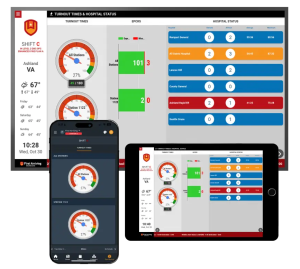
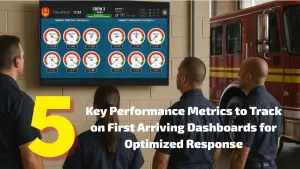
Dashboards offer live tracking of staffing, vehicles, turnout times, and dispatch metrics. For instance, Zebulon (NC) Fire saw friendly competition spike after displaying shift turnout gauges, leading to measurable performance gains.
Internal and Interagency Communications
- Internal: Replace the “death-by-email” huddle with on-screen alerts, videos, and announcements. Departments like South Adams (CO) and Port Jefferson (NY) use dashboards to centralize messages, policy updates, and training schedules.
- Interagency: Counties like Campbell (KY) and Crescent Springs‑Villa Hills share dashboards across ten+ agencies. Now OEMs and fire districts can view each other’s staffing, equipment, and response areas instantly.
“We can see each fire department page, and they can see ours,” Deputy Director James Sparks said. “They can see our equipment and the resources available to them.”
Deputy Director James Sparks, Campbell County Office of Emergency Management
Robust Integrations & Anywhere Access
First Arriving supports 130+ integrations, including Google/ESRI maps, traffic cams, weather/radar feeds, and common public safety systems. Dashboards aren’t confined to wall-mounted screens. A mobile-ready version ensures officers and coordinators stay connected to real-time data from tablets or phones—critical when away from the station.
First Arriving Dashboards blend real-time alerts, shared mapping, resource tracking, and performance analytics into one configurable, multi-platform solution. By unifying communication both within and across agencies, they strengthen mutual aid coordination, reduce response times, and improve safety. Whether planning, responding, or reviewing, these dashboards ensure all teams operate from the same trusted information—making communities safer and operations smoother.