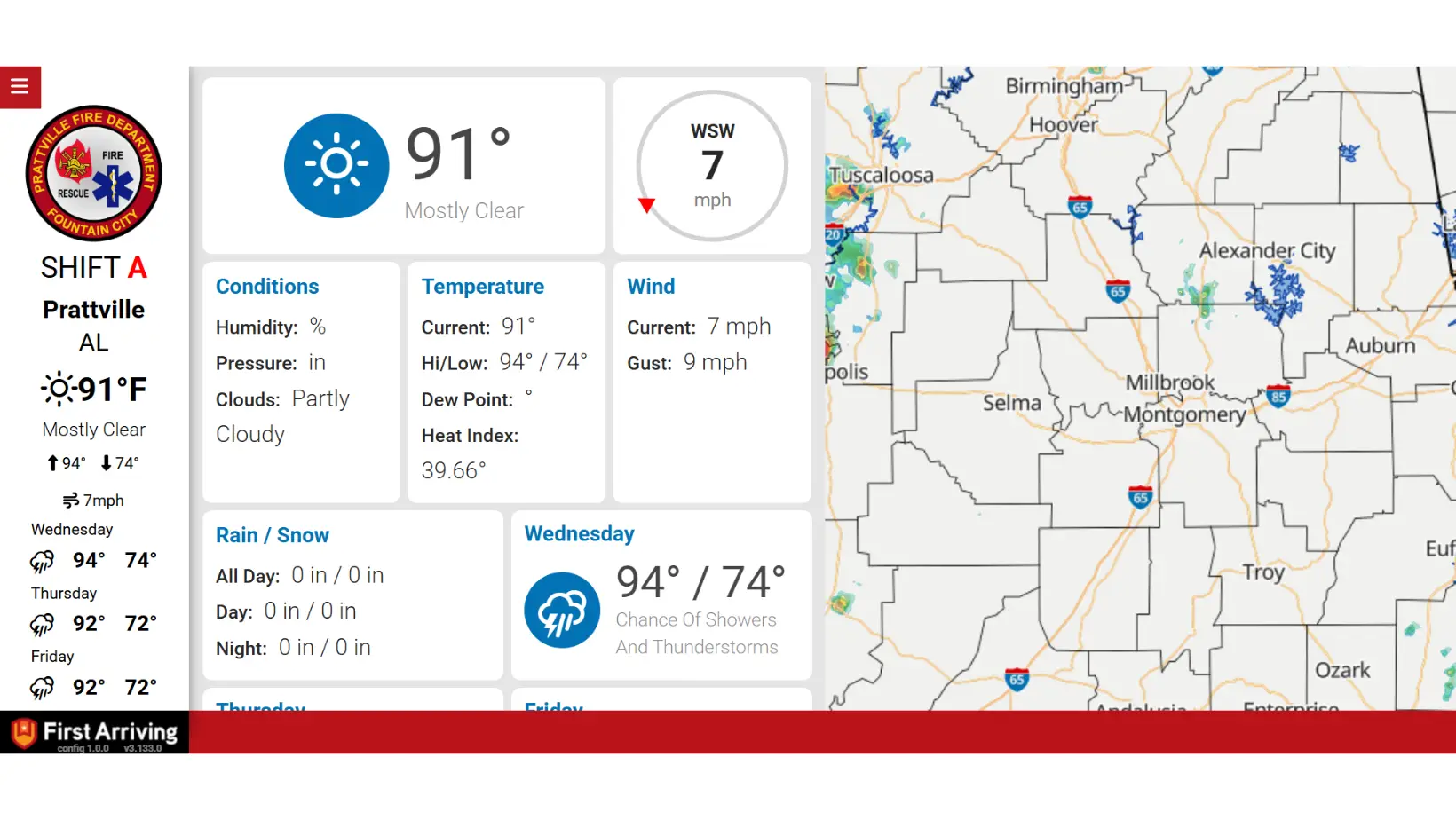
The ability to reach personnel with real-time updates has brough communication continuity across the Prattville Fire Department in a way that email never could.
“We realized that nobody checks their email,” said Chief Josh Bingham, or that some personnel “might check their email first thing in the morning, but then it might be three days before they come back and check it again.”
That caused a lag in communication until the department installed Dashboards by First Arriving, Bingham said—an idea they learned via word of mouth. “We had talked to some other departments across Alabama that had them, and it seemed like it worked pretty well for them,” Bingham said. “And just like anything, we’re always looking for ways to improve communication throughout the department.”
Any system that requires recipients to actively check for updates results in an inevitable delay. However, Bingham noted, dashboards immediately display updates on large screens where personnel see them in real-time, such as fire department day rooms or kitchens, where staff spend most of their time—and keep them posted for as long as needed, so they stay top of mind rather than being forgotten, as buried emails often are.
Bingham, who is in his 21st year with the department, says they’ve posted a dashboard in each of their four stations and one in their admin building. They have 98 sworn personnel and provide fire and EMS coverage for an area of 36 square miles with a population of about 40,000. With a high number of personnel and the challenges of fire department scheduling, “You want to get the same message across to everyone, and that way there’s no crossed lines of communication,” he said. “So this product really helps us do that.”
They’ve now had the dashboards for about a year. “We can log on, put information out there, and within just a few seconds it’s disseminated out to the crews, so we don’t have to worry about emails,” he said.
In this time, Bingham added, they’ve seen their improved communication impact operations, such as preparations for large city events and storms. “We can get updates from our EMA, via email, and shoot them right out onto the message boards so that they are getting real-time updates twice a day on potential severe weather impacts and things like that. So that’s been one of the largest benefits,” he said.
During a recent significant weather event, “Several days leading up to it we were able to post weather updates and say ‘Ok, here’s our incident action plan, this is what we’re going do if the weather gets really bad.’ So just having the option to have those 15 different slides that we can utilize, or blasting messages out across the banner that scrolls across the bottom, is really good.”
The displays are also helpful for more general information, Bingham added, from vehicles out of service, to photos from events, to notifications for benefits fairs and more. “It’s multifaceted really, as far as what we use it for,” he said.
That includes a benefit that was unexpected to Prattville, Bingham said, of discovering that they could integrate their new station alerting system into the dashboards. “So when a call comes into the station it’s automatically flashing up on the message board as the guys are walking out towards the trucks,” he said, “so they’re getting the nature of the call, the address, the time. That’s helped us reduce radio traffic because they’re not having to call the dispatcher and say ‘Hey, can you repeat the address or can you repeat the nature of the call’ – it’s all right there on the First Arriving dashboard.”
Bingham says the key to making the dashboards a success at any fire department is to plan frequent updates.
“If you have the same message rolling across for several weeks at a time, it’s probably going to start getting ignored, so we do a really good job of trying to update the slides at least once or twice a week,” he said, “and that way the information’s fresh.”