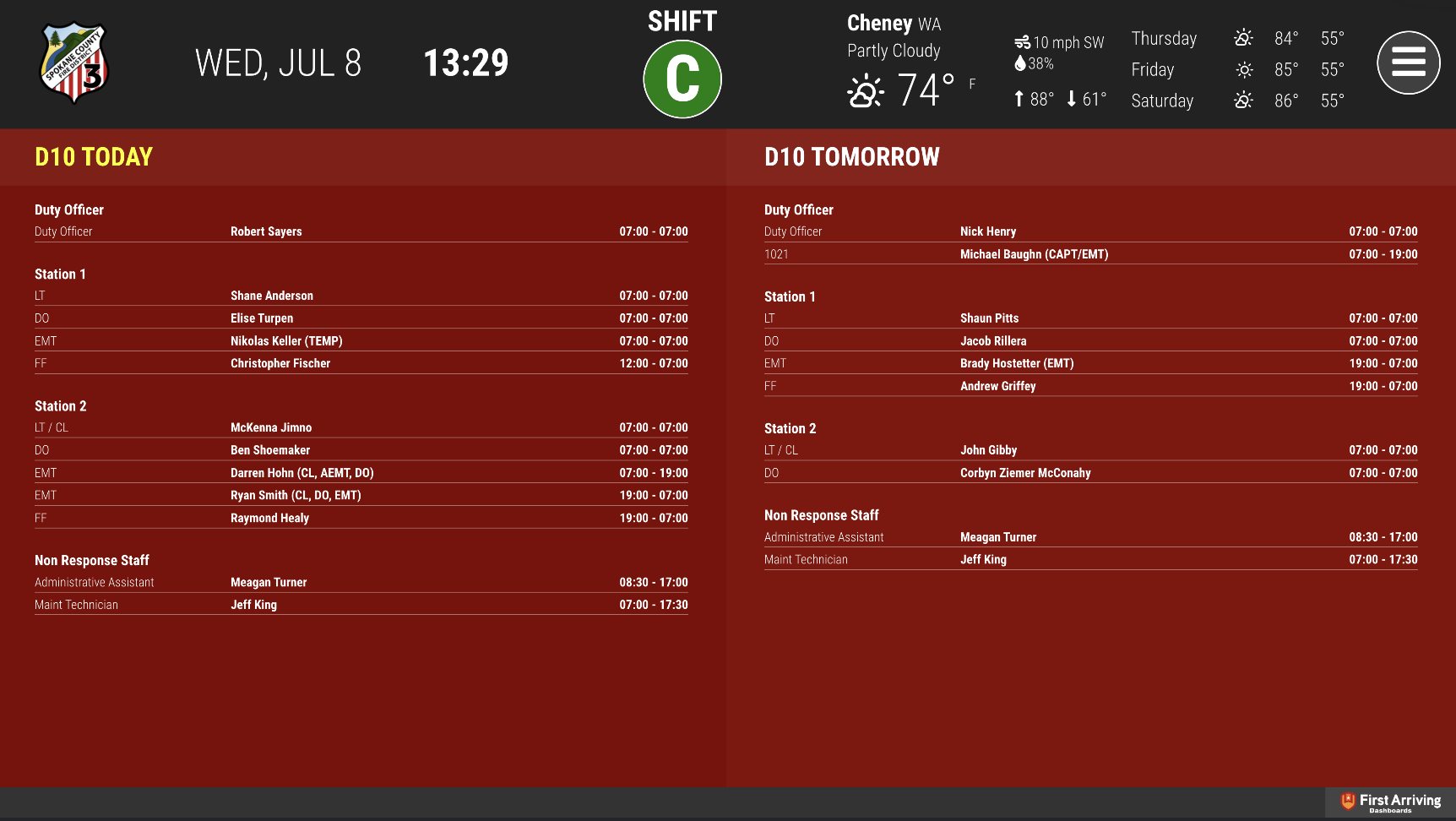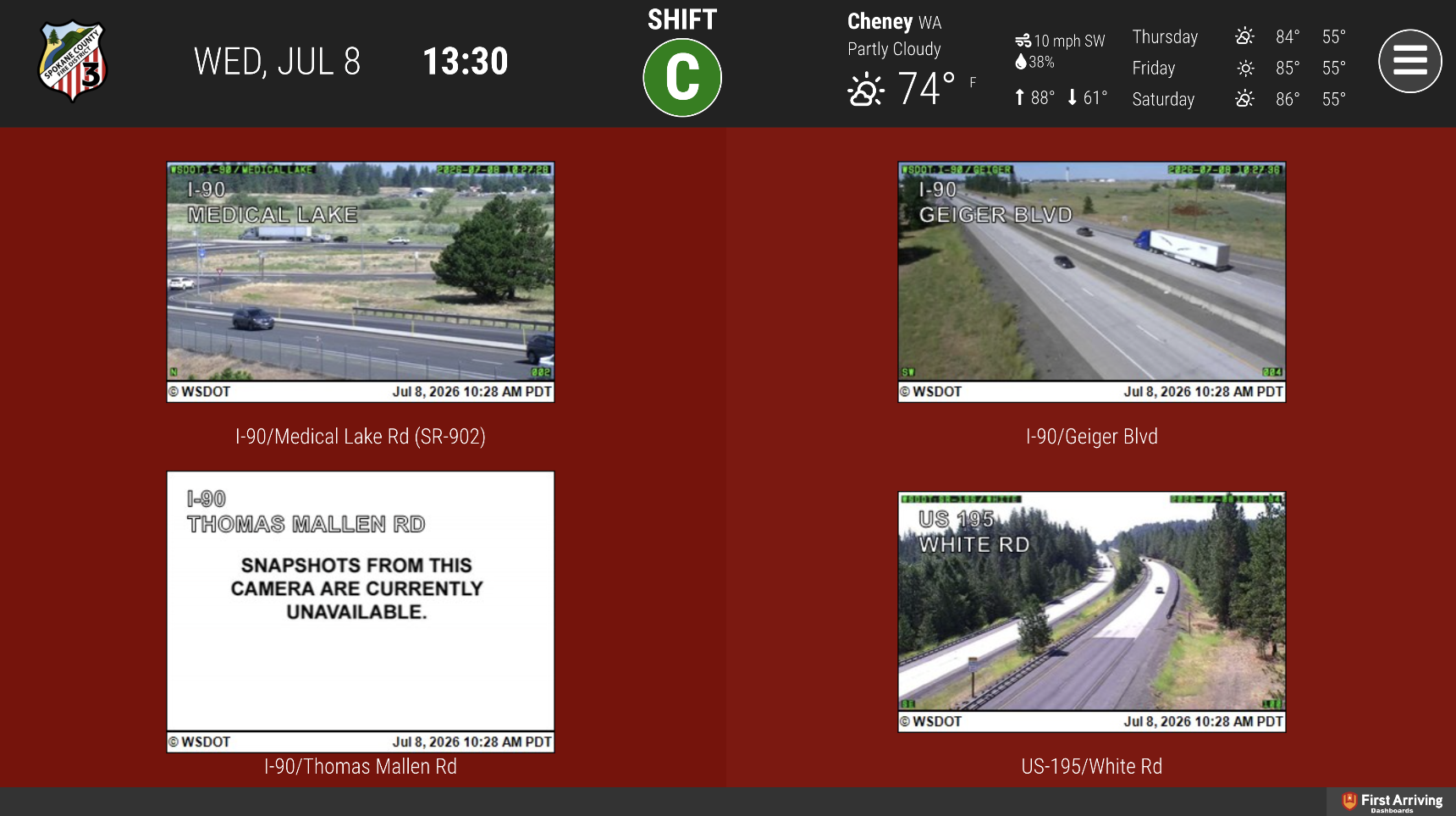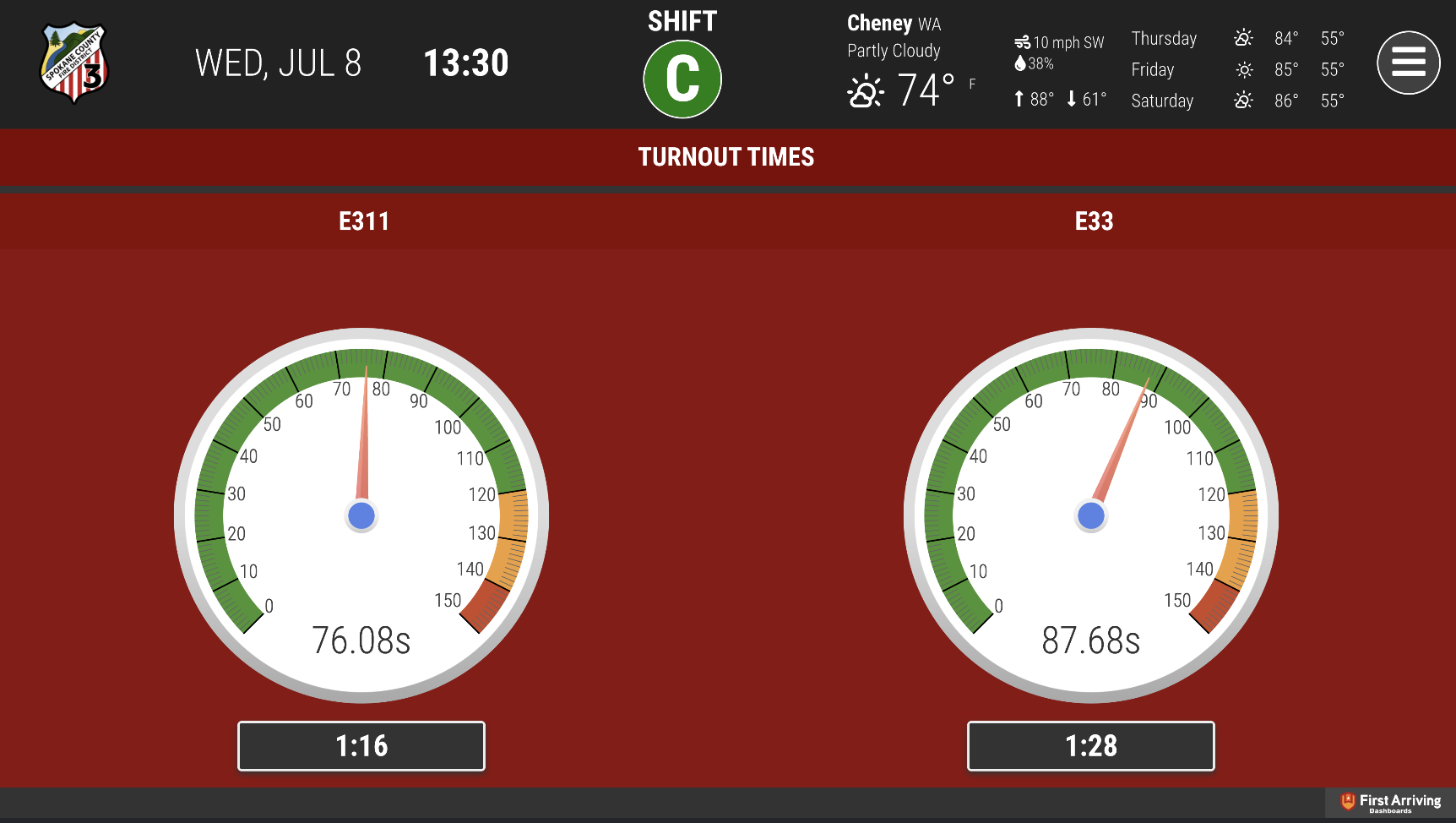
Spokane County Fire District 3 covers 570 square miles with 11 stations and a mix of career and volunteer firefighters. Keeping everyone aligned has long been a challenge. First Arriving dashboards created a real-time platform that connects personnel and partner agencies, evolving into a centralized system for operations, coordination, accountability, and situational awareness.
‘Getting Around to Everybody Every Day is a Challenge’
Like many departments, communication before dashboards relied heavily on traditional methods.
“We still had the pass-along books, emails, and dry-erase boards,” Battalion Chief Alex Turner explained. “We try to do as much face-to-face communication as possible, but we cover about 570 square miles, so getting around to everybody every single day is a challenge.”
The department’s operational structure added another layer of complexity. With approximately 30 full-time staff members and roughly 150 volunteers, communication had to reach personnel working staffed stations, volunteers responding from home, and some living outside the district.
The result was a communication environment where critical information often became fragmented across multiple systems, locations, and delivery methods.
“It’s very complex,” Turner said.
While email remains the department’s primary communication tool, it wasn’t always the most effective way to deliver time-sensitive operational information in real time.
Why the Department Started Looking for a Solution
The department wanted a way to improve visibility and reduce the friction caused by scattered information. Turner already knew the efficiency of dashboards from a previous department and understood the broader operational value they could provide beyond simple messaging.
“The main reason was to improve communications, not necessarily change communications, but just improve them,” he explained.
Equally important was the platform’s ability to integrate with existing systems and even connect information between neighboring agencies.
“I really believed it would help our inner-department communication significantly, which it has.”
‘Go For It’: Bringing First Arriving Into the Department
Turner had previously implemented dashboards at another local department, making it one of the region’s early adopters. That department already had a basic dashboard tied to its call notification software, but its capabilities were limited.
“It was literally limited to a single screen with a weather radar and the time,” he said. “Calls would pop up, and you could put messages on a banner, but that was about it.”
He knew there was a far more capable option available.
“There’s a way better product out there,” he recalled thinking.
Because department leadership had already seen First Arriving dashboards in use elsewhere, the approval process moved quickly. Created a proposal highlighting the dashboard capabilities.
“I brought it up in a staff meeting, showed them what it could do, and they basically said, ‘Okay, cool. Go for it.’”
‘All The Agencies Can See That’: Integrations Improve Spokane’s Operational Visibility
The rollout focused on the department’s staffed facilities, with dashboards installed in common areas to maximize visibility.
Today, the department operates six dashboards across its three staffed stations and its training center. Displays are positioned in day rooms, office lobbies and shared operational spaces where personnel naturally gather throughout the day.
The platform’s integration capabilities quickly became one of its most valuable features.
Among the department’s most-used integrations are:
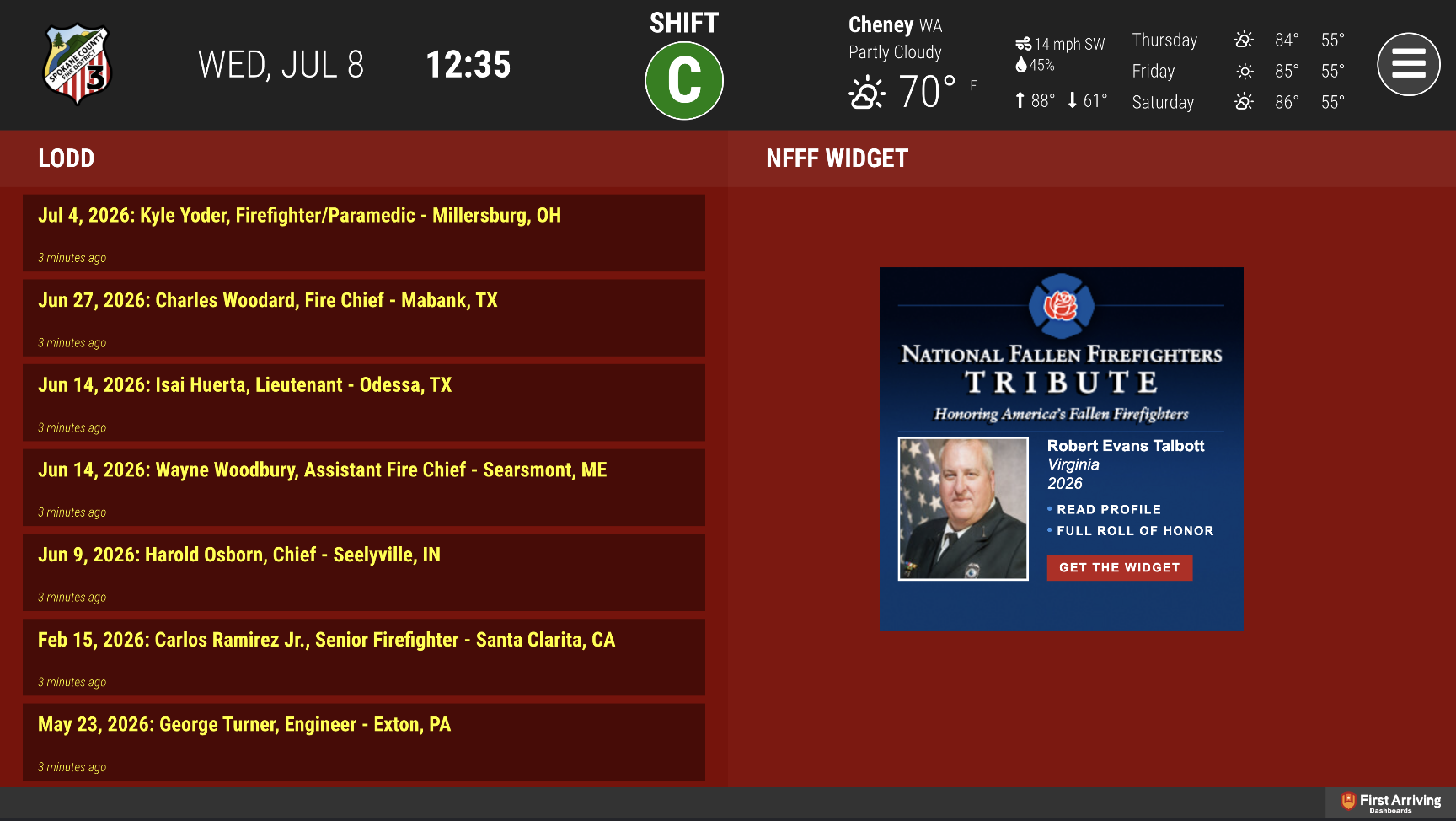
“We added the line-of-duty death notifications, a little tribute widget. It's a big thing,” Turner said. “Our guys were tracking that on the whiteboard at the stations, just as an honor, and to keep track of the number of line-of-duty deaths.
”One particularly impactful feature has been the department’s cross-agency communication integration with neighboring departments.
The agency now shares dashboard information with nearby departments, including:
Using shared Google Sheet integration displayed across all participating dashboards, agencies can instantly communicate operational updates such as apparatus outages or resource limitations.
“So I can go put in, ‘Hey, our ladder truck’s out of service,’ and all the agencies can see that,” he explained.
“That’s been super helpful.”
The Impact: Real-Time Visibility and Operational Improvements
For the department, the biggest improvement has been operational awareness.
Instead of relying solely on emails, phone calls, or scattered systems, personnel now have access to a centralized, real-time view of critical information throughout the day.
That visibility extends beyond their own organization.
Crews can instantly view neighboring agency staffing levels, monitor regional resource availability, track traffic conditions, review training schedules, and stay updated on active operational issues — all from a single screen.
The dashboards have also helped reduce administrative friction.
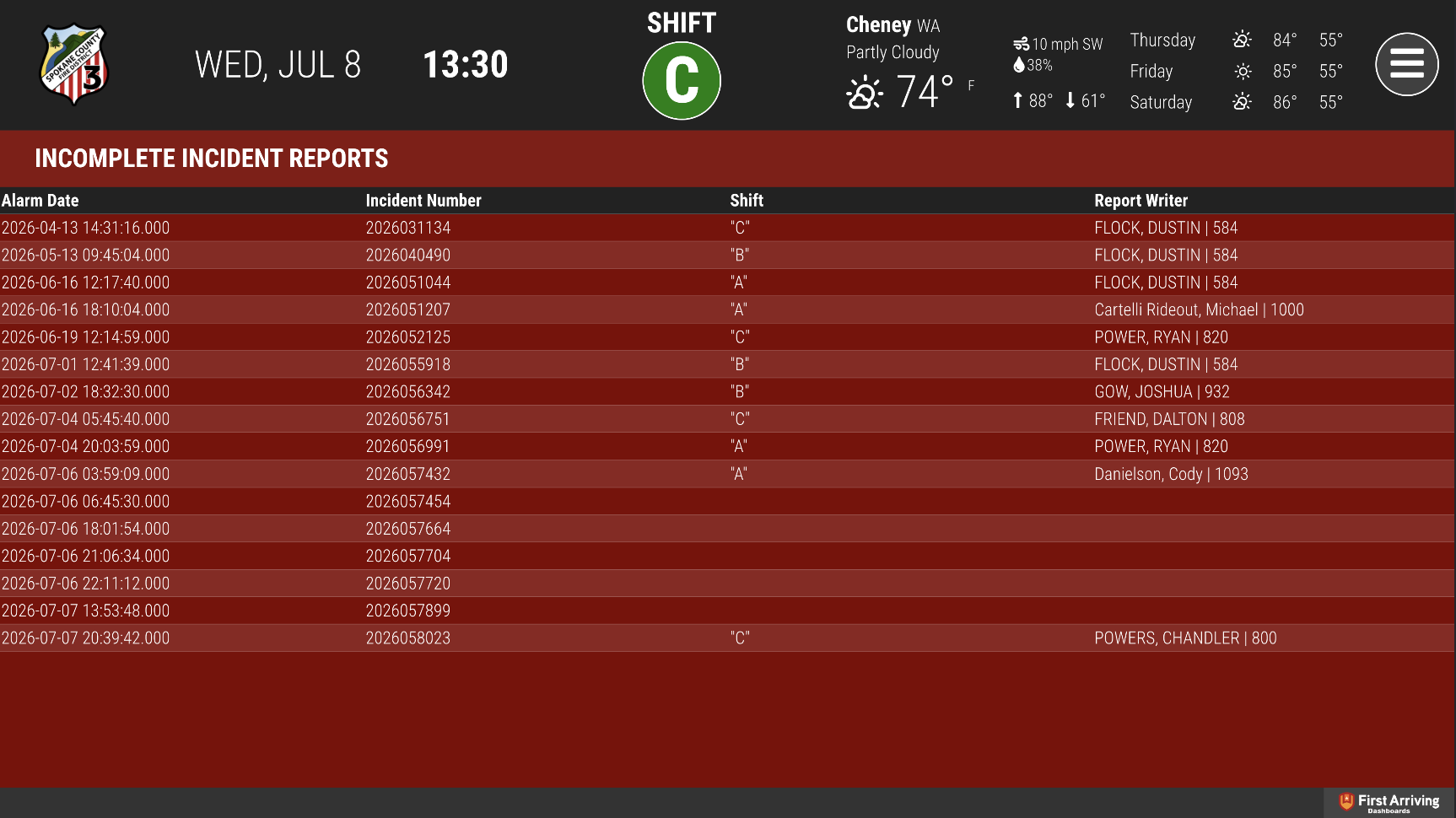
One example is the department’s ESO reporting integration, which displays incomplete reports on the dashboards to help improve accountability.
“It’s kind of like the naughty board,” Turner joked. “People see their names up there and get their reports done.”
The department’s wildland fire response capabilities have also benefited from integrated wind mapping tools, providing immediate situational awareness.
More importantly, the dashboards have helped unify communication across a department with a uniquely complex operational structure.
What was once fragmented across emails, whiteboards, spreadsheets, and separate systems is now consolidated into a shared operational picture that supports both daily routines and critical decision-making.
Staying Connected, Reducing Communication Gaps
For Spokane County Fire District 3, First Arriving dashboards have become far more than digital displays.
They’ve become a central communication layer connecting stations, volunteers, command staff and neighboring agencies in real time.
By transforming scattered information into clear operational visibility, the department has improved awareness, strengthened collaboration and reduced the communication gaps that naturally emerge in large, geographically dispersed organizations.
In an environment where timing, coordination and visibility matter every day, operational clarity has become an essential part of how the department operates.