Volunteers are the backbone of many fire and EMS departments. They step up and give their time and energy to protect their communities. But what happens when volunteer fire and EMS members do not meet department expectations?
During my time as a recruitment and retention coordinator at a volunteer fire department in Maryland, I occasionally encountered an unmotivated and underperforming volunteer EMT who needed help to meet the department’s expectations. Rather than immediately addressing their performance issues, I took the time to have a sincere, empathetic conversation with them. During our talk, I typically discovered they were dealing with personal challenges affecting their performance and commitment. I offered the necessary support and resources by understanding their situation and showing genuine concern. This simple act of listening, offering encouragement and understanding most times allowed the members to find solutions, and they soon were able to jump back into the volunteer schedule and progression.
Before jumping to conclusions, take a step back and try to understand the root of the problem. Is the volunteer struggling with personal issues, lacking training, or feeling unappreciated? Sometimes, external factors can impact performance. Have a one-on-one conversation to get to the bottom of things. Show empathy and listen actively. Sometimes, volunteers may need more clarification on what’s expected of them. Clearly outline their roles, responsibilities, and the standards they need to meet. Make sure they know the importance of their contribution and how it fits into the bigger picture of the department’s mission.
When giving feedback, focus on specific behaviors rather than personal traits. Use the “sandwich” method:
- Start with something positive.
- Address the area of improvement.
- End on a positive note.
For example, “You’re always punctual and committed, which is great. I’ve noticed you’re having some trouble with [specific task]. Let’s work on improving that together because your dedication is invaluable to us.”
Maybe your volunteers are underperforming because they lack the necessary skills. Offer additional training opportunities or pair them with a more experienced member for mentorship. Hands-on training and shadowing can boost their confidence, competence and engagement.
Help the volunteer set specific, achievable goals. These could include attending several training sessions, improving response times, or mastering a particular skill. Make sure these goals are realistic and within their reach. Celebrate small wins along the way to keep them motivated. Track their progress and provide ongoing support. Check in regularly to see how they’re doing and if they need any further assistance. Showing that you care about their development can boost their morale and performance.
A strong team spirit can help underperforming volunteers feel more connected and supported. Encourage camaraderie through team-building activities, social events, and open communication. When volunteers feel like part of a team, they’re more likely to put in the effort to meet expectations. When the volunteer shows improvement, recognize and reward their efforts. A simple “thank you,” a shout-out at a meeting, or a small token of appreciation can go a long way. Positive reinforcement encourages continued progress and shows that their hard work doesn’t go unnoticed.
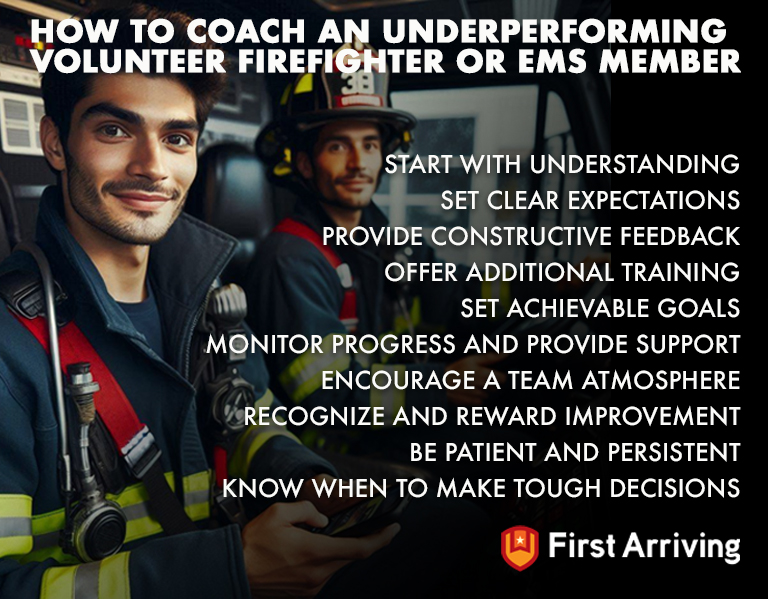
Change doesn’t happen overnight. Be patient and persistent in your coaching efforts. Sometimes (okay – a lot of times), it takes a little while for volunteers to adjust and improve. Keep encouraging them and providing the necessary support. Despite your best efforts, there may come a time when a volunteer cannot meet the department’s standards. If this happens, handling the situation with care and respect is essential. Offer them other ways to contribute if possible, or help them transition out of the role in a way that maintains their dignity and respect.
Coaching an underperforming volunteer firefighter or EMS member can be challenging, but it’s also incredibly rewarding. By approaching the situation with understanding, clear communication, and support, you can help them improve and become valuable members of your team. Remember, every volunteer is there because they care – sometimes, they need a little extra guidance to shine.
By Walter Campbell, Recruitment & Retention Strategist
Want to boost your social media reach and improve recruitment and retention? First Arriving can help! Fill out our Online Inquiry Form or email Getstarted@FirstArriving.com today.
For more insights on recruitment and retention in fire, EMS, and law enforcement, subscribe to our blog and stay updated with the latest strategies and best practices.