Over the past decade, public safety agencies have invested heavily in technology integration—linking CAD to records systems, syncing staffing software with payroll, and pushing alerts to phones, tablets, and station screens. Yet despite these connections, information often remains siloed, leaving fire chiefs, EMS leaders, and law enforcement command staff asking: why is it still so difficult to get a clear view of what’s happening across the department? (2024 U.S. Public Safety Trends Report, n.d.) The answer is simple.
Integration is not the same as operational visibility.
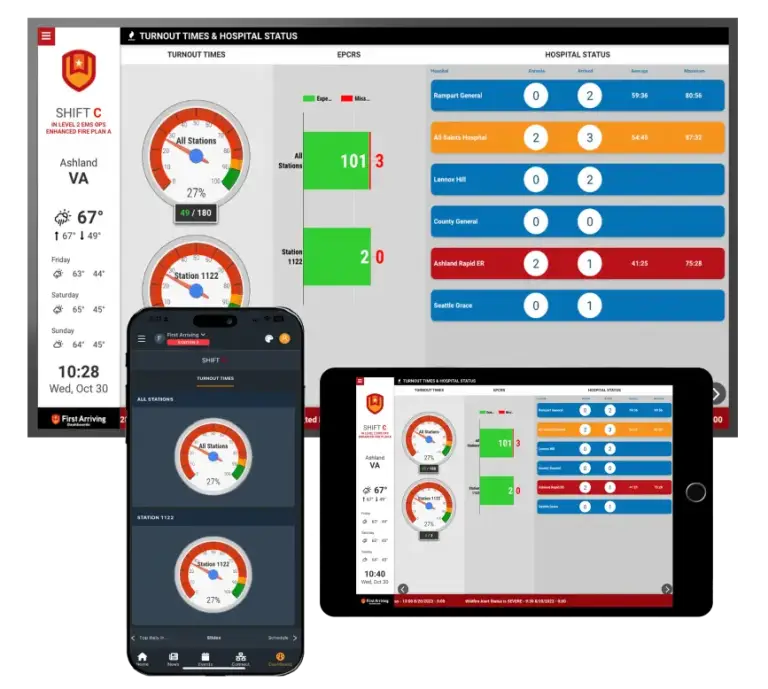
Many departments have connected their systems, but data often remains scattered across multiple platforms and logins. True situational awareness comes from consolidating that information into a single, real-time view, exactly what First Arriving Dashboards provide.
For years, technology integration has been seen as the solution to information silos in public safety, with departments connecting CAD to RMS, syncing staffing platforms with payroll, linking fleet systems to maintenance data, and integrating alerts across mobile devices and station displays. The logic seems simple: if systems connect, information flows, and the problem is solved.
In practice, integration and operational visibility are not the same. Integration only ensures that systems can exchange data. It does not consolidate information, prioritize alerts, or present a clear operational picture. Even with fully integrated CAD, RMS, staffing, fleet, weather, and training systems, command staff often must log into multiple platforms and mentally piece together the current situation. That extra step creates friction — and in emergency services, where conditions change rapidly and decisions carry real consequences, friction slows response and increases risk.
What Integration Actually Solves
System integrations provide meaningful benefits for fire departments, EMS agencies, and law enforcement organizations.
They help reduce many of the manual processes that once consumed time and introduced errors.
Integration improves:
- Data duplication across systems
- Manual entry errors
- Synchronization between platforms
- Automated reporting and workflows
These improvements make organizations more efficient and streamline workflows.
But integration alone does not:
- Reduce mental efforts for leaders.
- Focus on operational signals.
- Create unified situational awareness.
- Eliminate login fatigue
- Present operational context across stations and roles
In other words, integrated systems can still produce fragmented visibility.
The Real Gap: Operational Context
Imagine a typical day inside a busy department.
CAD shows three active incidents.
The staffing platform reveals two open shifts.
RMS shows a backlog of reports waiting to be completed.
Weather alerts indicate severe storms moving toward the area.
Training compliance metrics show certifications approaching expiration.
Each system may be fully integrated with others.
But no one sees the entire operational picture in one place.
Command staff must move between screens, logins, and alerts to understand what’s happening across the department.
That process requires time and mental effort.
And every extra step introduces friction into the decision-making process.
Operational Visibility Changes the Equation
Operational visibility focuses on a different question than integration.
Instead of asking, “Are our systems connected?”
It asks:
“What information matters right now, and who needs to see it?”
When agencies focus on visibility, technology shifts from simply storing and sharing data to presenting operational context in real time.
This requires:
- Live data from multiple systems
- Role-based views for different users
- Clear visual presentation of key metrics
- Shared operational awareness across the organization
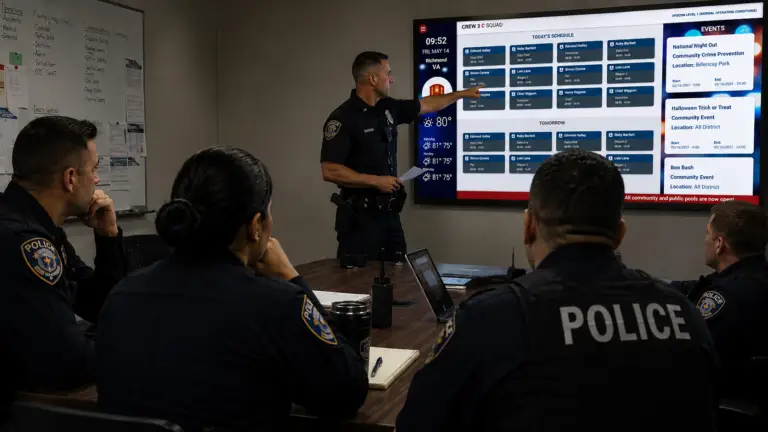
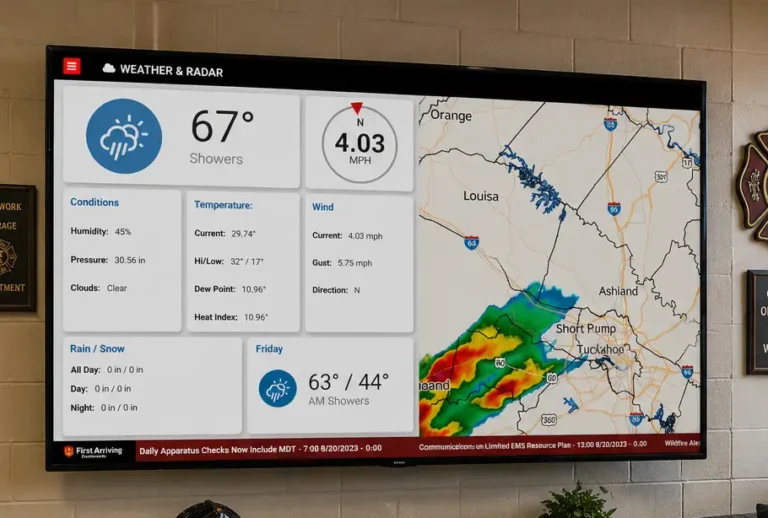
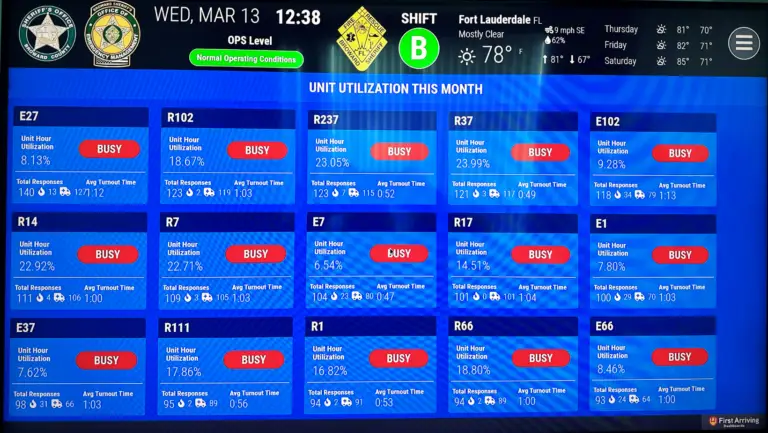
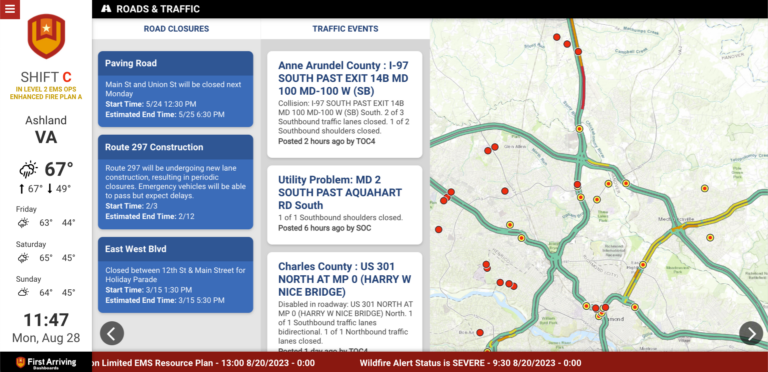
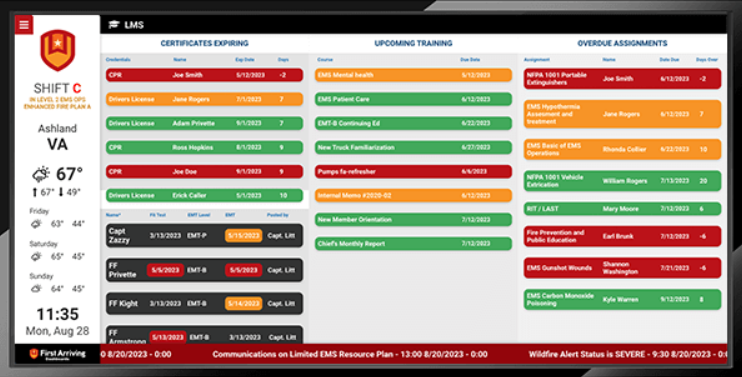
Solutions like First Arriving Dashboards are designed to surface information from CAD, staffing systems, weather alerts, and other platforms into a single operational environment used across stations, command offices, and mobile devices.
Instead of searching for information, leaders see it immediately.
The Difference Between Connected and Clear
Understanding the difference between integration and visibility is easier when comparing outcomes.
Connected Systems
- Data flows between platforms.
- Multiple logins are required.
- Information is technically accessible.
- Leaders must assemble the operational context themselves.
Operational Visibility
- Data appears in a centralized dashboard.
- One environment for situational awareness
- Information is immediately actionable.
- Context is presented automatically.
Connected systems reduce technical barriers.
Operational visibility reduces decision barriers.
And in emergency services, reducing decision barriers can make a measurable difference in how quickly leaders respond to changing conditions.
Why Operational Visibility Matters in Public Safety
Fire departments, EMS agencies, and law enforcement organizations operate in demanding environments where explicitness is essential.
When visibility is fragmented, small operational issues can go unnoticed until they become larger problems.
For example:
- Staffing shortages may not be immediately obvious.
- Apparatus readiness may require manual checks.
- Incident context may require cross-referencing multiple systems.
- Alerts from different platforms may compete for attention.
But when operational information is unified in a single dashboard environment, the entire organization benefits.
Leaders can prioritize faster.
Crews gain a better understanding of the department’s operational posture.
Multi-station coordination improves.
And confidence increases across the organization because everyone is seeing the same information at the same time.
Visibility becomes a force multiplier.
How Dashboards Improve Department-Wide Awareness
Operational dashboards work best when they bring together the information leaders and crews need most.
For many departments, that includes:
Real-Time Incident Status
Active calls, unit assignments, and response updates pulled from CAD.
Staffing and Personnel Status
Shift coverage, open positions, and staffing levels across stations.
Apparatus and Fleet Readiness
Vehicle status, maintenance alerts, and availability indicators.
Weather and Hazard Alerts
Incoming weather conditions or regional alerts that could affect operations.
Operational Performance Indicators
Training compliance, reporting backlogs, and other operational metrics.
When this information appears in one shared environment, departments develop a deeper insight into what is happening across the organization.
That shared awareness reinforces quicker, more confident decision-making.
The Shift Happening in Public Safety Technology
Forward-thinking departments are beginning to rethink how they evaluate technology.
Instead of focusing only on integration, they are asking a more strategic question:
Do our leaders and crews have a single operational view of the department?
That shift is shaping how agencies deploy dashboards and information displays across their organizations.
Operational data is increasingly being surfaced on:
- Station display screens
- Command staff monitors
- Mobile command environments
- Administrative leadership dashboards
Integration becomes the infrastructure that moves data between systems.
Visibility becomes the strategy that makes that data usable.
Questions Every Department Should Ask
If your systems are integrated but functionality still feels broken up, it may be time to evaluate how information is presented across your agency.
Start with a few simple questions:
- How many platforms do leaders check daily to understand operations?
- Is there a single operational dashboard visible across stations?
- Are alerts prioritized, or simply delivered from multiple systems?
- Can command staff see incidents, staffing and preparation in one place?
- Does your technology reduce mental effort or increase it?
These questions can reveal whether your organization has achieved true operational visibility or is still relying on fragmented views of critical information.
From Integration to Insight
Public safety agencies now generate more operational data than ever before.
CAD systems, staffing platforms, RMS software, fleet monitoring tools, and weather services all produce valuable information.
But data alone does not create better decisions.
Clarity does.
When departments surface key operational information in a single, unified dashboard environment, leaders spend less time gathering information and more time acting on it.
That is the goal of modern public safety technology.
Not just connecting systems.
But turning those connections into operational visibility strengthens the entire organization.
Drowning in Information? We Turn Chaos Into Clarity
A real-time information platform that connects your most critical systems — so your department knows exactly what’s happening, when it matters most – across digital signage, web, mobile, and tablet. Trusted by 1400+ Departments