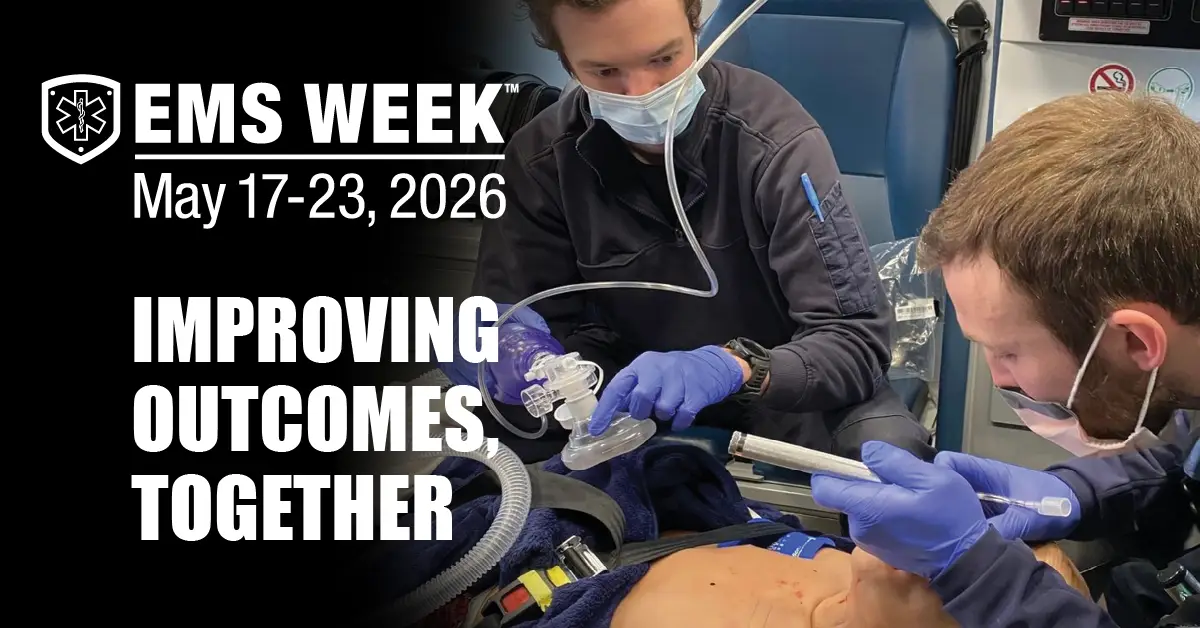
National EMS Week 2026 runs May 17–23. This year’s theme is “Improving Outcomes, Together.” It highlights the collaborative nature of EMS. Dispatchers, EMTs, paramedics, firefighters, hospitals, supervisors, and support staff all work toward better patient outcomes and stronger communities.
For fire and EMS departments, EMS Week is more than recognition. It’s an opportunity to celebrate personnel, strengthen culture, share success stories, and reinforce the value of teamwork and data-driven responses.
That’s where First Arriving Dashboards & Digital Signage Platform can play a powerful role.
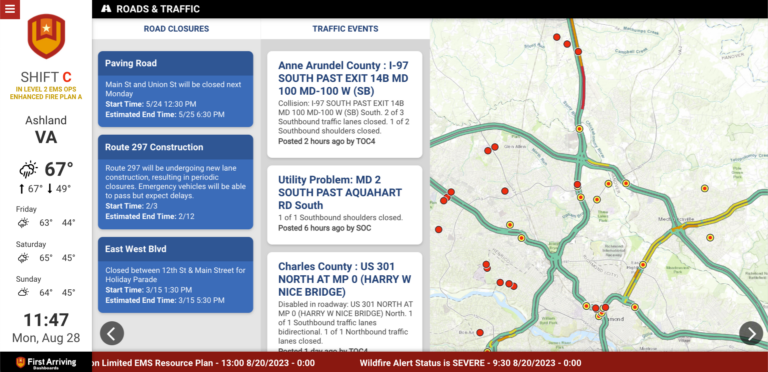
By integrating CAD, dispatch notifications, response metrics, staffing data, RMS platforms, training records and internal communications into one centralized operational view, First Arriving gives departments a unique way to both recognize their EMS professionals and improve operational visibility year-round.
Turn EMS Week Into a Visible Department-Wide Campaign
One of the biggest challenges during EMS Week is visibility. Recognition efforts often get buried in emails, isolated social media posts, or printed flyers that crews may never see across different shifts and stations.
First Arriving dashboards change that by allowing agencies to push EMS Week messaging everywhere simultaneously:
-Station and apparatus bay displays
-Training rooms
-Watch office monitors
-Desktop dashboards
-Tablets and mobile devices
-Public-facing lobby displays
Departments can build rotating EMS Week slideshows featuring:
-Daily recognition messages
-Crew spotlights
-“Provider of the Day” features
-Milestone anniversaries
-Certification achievements
-Save stories and successful outcomes
-Community thank-you messages
-EMS Week event schedules
-Blood drive information
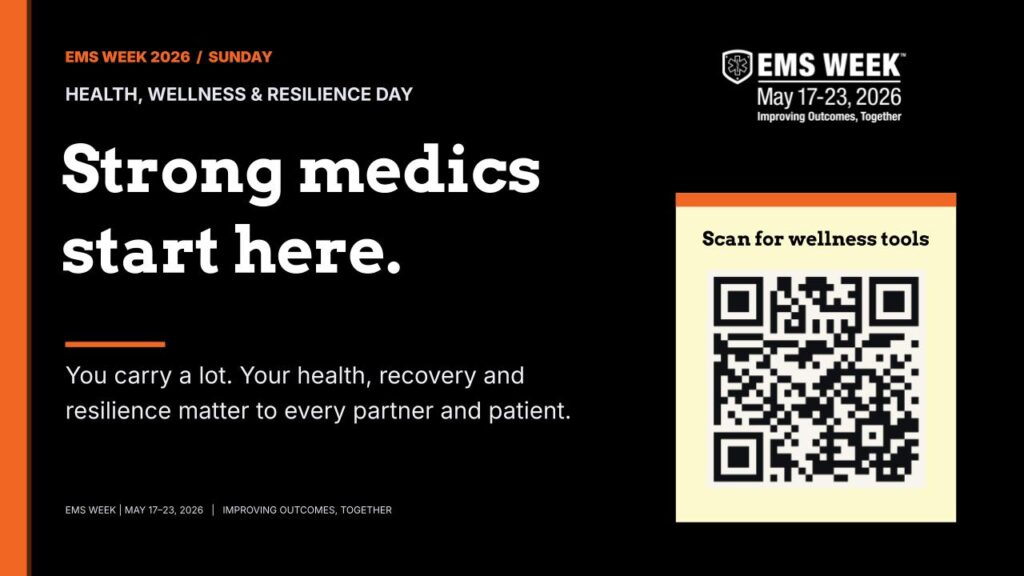
-Wellness reminders
Because the platform supports PowerPoint, OneDrive, and SharePoint embedding, agencies can quickly upload existing EMS Week presentations or shared folders directly into their dashboards without rebuilding content from scratch.
The integration guidance available in First Arriving Support Documentation for Microsoft 365, PowerPoint, OneDrive & SharePoint Embeds makes it easy for departments to create dynamic recognition displays that automatically stay up to date across every screen in the organization.
Recognize the People Behind the Calls
The EMS Week 2026 campaign specifically emphasizes the humanity behind EMS work — the clinicians, responders, dispatchers, and support personnel whose actions improve lives every day.
Dashboards provide agencies with a highly visible way to celebrate those contributions in real time.
Departments can use dashboard integrations to highlight:
-Top responders by call volume
-Fastest turnout improvements
-CPR saves and ROSC outcomes
-Years of service
-New paramedic certifications
-EMT and medic preceptor recognition
-Community paramedicine milestones
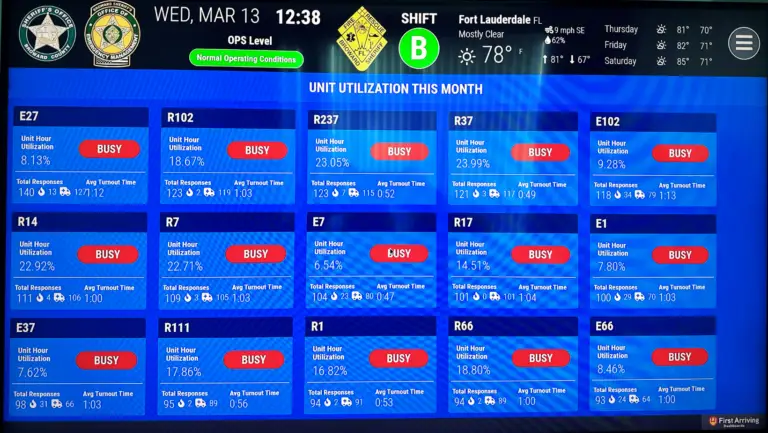
-Unit utilization achievements
-Training accomplishments
-Shift or station performance trends
Instead of recognition happening once at an awards banquet, dashboards make appreciation part of daily station life.
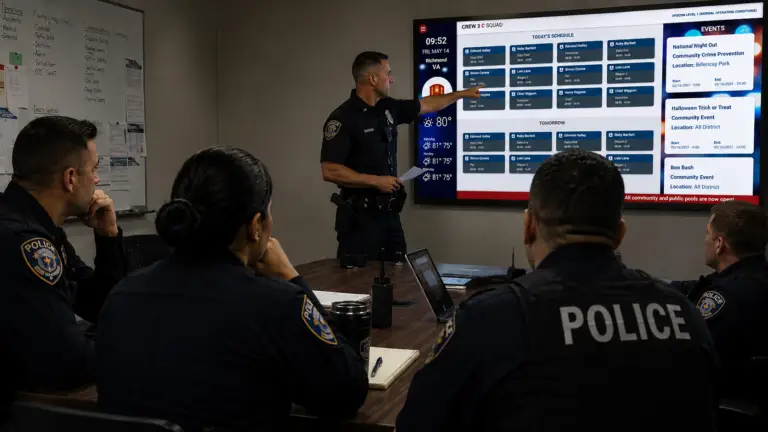
And because many agencies already integrate scheduling systems into First Arriving, crews can automatically see birthdays, anniversaries, certifications, staffing updates, and upcoming events displayed throughout the day.
That visibility matters.
Recent EMS community discussions online repeatedly highlight that meaningful recognition, communication, and support improve morale and retention, especially when agencies ensure recognition reaches every shift — not just day staff.
Use Real Operational Data to Tell the EMS Story
EMS Week is also the perfect time to show personnel and the community the measurable impact EMS teams make every day.
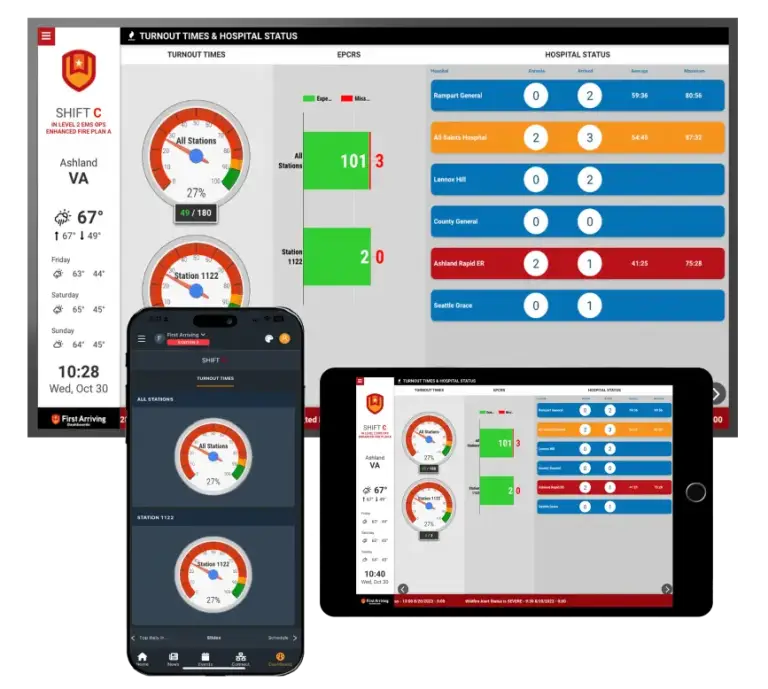
With First Arriving’s integrations across dispatch, CAD, RMS, staffing, and operational systems, departments can display real-time and historical performance metrics directly on dashboards, including:
-Total EMS incidents handled
-Average turnout times
-Response time trends
-Unit utilization
-Mutual aid activity
-Hospital turnaround delays
-Geographic call density
-Peak call volume periods
-EMS staffing status
-Training compliance
-Fleet readiness
Rather than hiding operational data in spreadsheets or monthly reports, dashboards transform those numbers into visible, understandable information that crews and leadership can use immediately.
This aligns directly with the EMS Week theme of Improving Outcomes, Together. Better outcomes depend on shared awareness, faster communication, and informed decision-making across the entire organization.
Highlight Dispatch and Response Coordination
Few things represent teamwork better than the connection between dispatch and field crews.
First Arriving integrations can display live incident alerts, dispatch notes, unit status, turnout timers, mapping, routing, and pre-plan data directly on station screens and mobile devices.
During EMS Week, agencies can use these operational displays to educate personnel and even the public about:
How dispatch information supports patient care
How GIS and mapping improve routing
How turnout and response time tracking improve accountability
How pre-incident planning supports scene safety
How integrated operational awareness improves coordination between EMS, fire, law enforcement, and hospitals
This creates an opportunity not just for recognition, but also for education and transparency.
Bring Community Engagement Into the Dashboard
EMS Week is designed to connect agencies with their communities. National organizers encourage departments to host blood drives, public outreach events, and awareness campaigns throughout the week.
First Arriving dashboards can support these efforts by displaying:
-Event countdowns
-Blood drive schedules
-CPR class information
-Community safety messages
-Social media feeds
-Public health alerts
-Donation drives
-Recruitment messaging
-“Meet Your EMS Team” features
Lobby displays and public-facing screens become valuable communication tools that help agencies showcase their people and mission beyond emergency calls alone.
While EMS Week is a celebration, it is also a reminder that supporting EMS personnel requires more than appreciation posts and catered lunches.
The most effective agencies pair recognition with investments in communication, operational awareness, staffing visibility, and data transparency.
That is ultimately what platforms like First Arriving are designed to support.
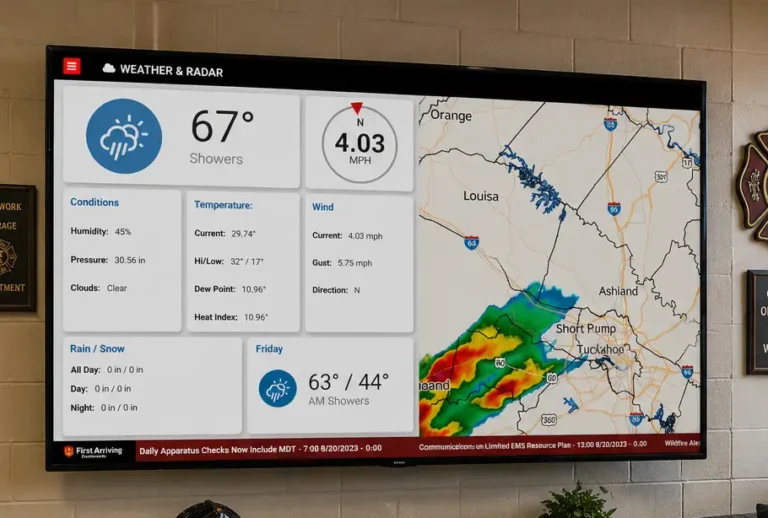
By bringing together dispatch systems, response metrics, RMS data, staffing information, training records, fleet readiness, weather intelligence, and internal communications into one operational hub, departments reduce information silos and improve shared situational awareness.