Fragmented systems, repeated logins and scattered updates cost police departments more than time. They drain attention, readiness and command visibility.
Does the start of a shift follow a pattern like this in your department?
Officers arrive, check their assignment, scan email, review roll-call notes and log into CAD. They check RMS for reports that need corrections or follow-up. They look for court notifications, training assignments, fleet updates, policy acknowledgments, BOLOs, real-time crime center bulletins and special event details.
A supervisor may remind the shift about a road closure, a staffing change or an updated procedure. Some officers hear updates in roll call. Others catch operational notes in an email. Someone else sees it in a text thread. Another officer misses it because they are already responding to calls.
Then the shift starts. CAD, RMS, training, policy, scheduling and fleet systems all matter to operational readiness and situational awareness. The problem is what happens when every update, regardless of importance or urgency, lives somewhere different.
Each system may serve a purpose. But each system also asks for attention, and every login, search, notification and repeated check costs time and attention. When information is scattered, personnel are forced to keep switching systems, checking messages and asking basic operational questions during a shift that is already full of interruptions.
That creates a practical problem. The more attention personnel spend finding information, the less attention they have for using it.
Supervisors pay the cost twice
Supervisors often pay twice for information overload. First, they have to find the information themselves. Then they have to make sure everyone else sees it, understands it and acts on it.
A sergeant may spend time confirming who reviewed the updated pursuit policy, who completed required training, who is assigned to a special detail, who has court in the morning and which vehicles are out of service.
Some of that work will always be part of supervision. But too much of it becomes rework when information is scattered. The supervisor becomes the bridge between disconnected systems, repeated messages and personnel who are trying to keep up.
Supervisors should be focused on performance, readiness, coaching, accountability and field decision-making — not manually assembling a picture the department already has.
Command staff lose visibility
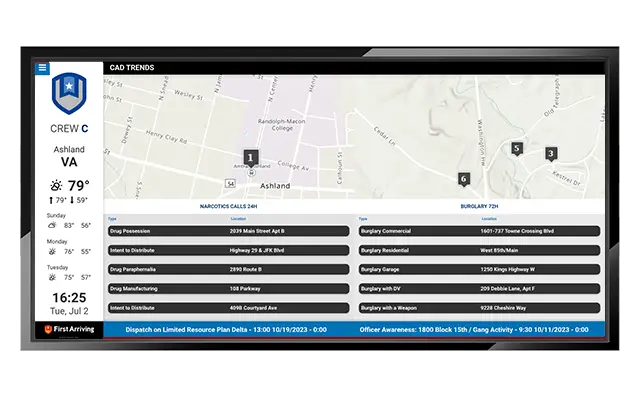
Command staff experience the same problem on a larger scale. Police chiefs, sheriffs, captains and administrative leaders may need to check staffing, overtime, training compliance, policy acknowledgments, fleet availability, special event staffing, court conflicts, crime trends and other operational indicators.
If those answers live in separate systems, leaders spend too much time collecting information and not enough time acting on it.
What could your agency do with that time?
A few minutes here and there may not sound significant. But multiply those minutes across every officer, deputy, supervisor and command staff member. Multiply them across every shift, every week and every month.
What could your agency do with that time if personnel did not have to chase routine updates across disconnected systems?
- Officers could complete reports sooner
- Supervisors could spend more time coaching and leading
- Command staff could focus on planning, accountability and decision-making
- Personnel could spend more time preparing for the next call, reviewing training or engaging with the community
Use the calculator to estimate the cost
The attention cost calculator helps police chiefs, sheriffs and command staff estimate how much time fragmented information may be costing the agency. The calculator asks for basic inputs: number of personnel, number of systems regularly checked, average minutes spent and number of shifts involved.
If five officers each spend 10 minutes per shift checking separate systems for updates that could be visible in one operational view, that is nearly an hour of attention every shift. Across a week, month or year, the cost becomes much harder to ignore.
How severe is information overload in your department?
Police chiefs rarely lack information. The real challenge is that critical operational information is often scattered across too many systems, emails, texts, spreadsheets and dashboards. This assessment will help you evaluate whether your department’s information environment is manageable, strained or high risk.
Your results
Top problem areas
Want a clearer operational picture?
The real goal is a clearer operational picture
Reducing information overload is about making critical information easier to see, easier to trust and easier to act on.
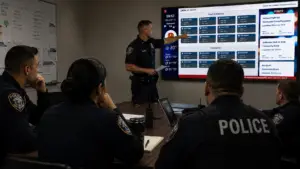
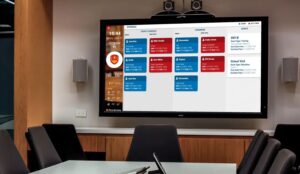
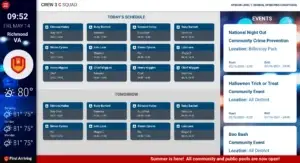
First Arriving helps law enforcement agencies bring important updates, system data and operational information into one clearer view for headquarters, briefing rooms, RTCCs, substations, command staff and field personnel.
The goal is not to replace those systems. The goal is to reduce the chase for information and clarity.
When the most important information is visible in one operational view, personnel spend less time searching, checking and confirming. Supervisors have a clearer picture across the shift. Command staff have better visibility across the agency.
See how First Arriving supports law enforcement agencies →