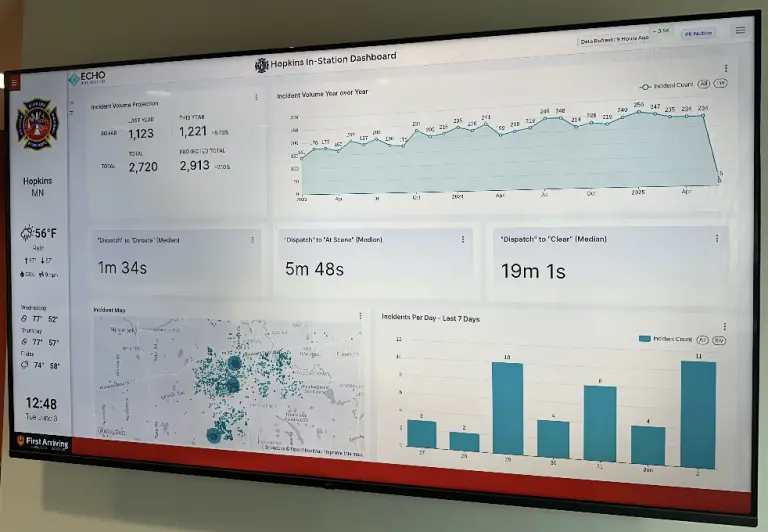
Most fire departments are dealing with information overload — they just don't realize how much it's affecting them. Critical operational information is scattered across emails, texts, scheduling software, training platforms, RMS systems, and bulletin boards.
The result is fragmented visibility, slower decisions, and daily friction that chips away at readiness. This short assessment helps fire chiefs and command staff evaluate the severity of information overload in their department. In just a few minutes, you will get a clearer picture of whether your current information environment is manageable, strained, or high risk — and where communication friction may already be affecting readiness and decision-making.
What is information overload in the fire service?
Information overload in a fire department is not simply receiving too many messages. It is the operational burden of too many inputs, too many logins, and too little clarity about what matters most. Staffing status, training completion, fleet readiness, acknowledgments, inspections, and daily operational priorities may all be available somewhere.
But when critical information is scattered across too many disconnected systems, channels, and logins, personnel have to work harder to build a clear operational picture — and important updates are more likely to be missed. The problem is further complicated when departments lack a deliberate communication and information plan. Without one, there is no consistent way to separate the signal from the noise or to get time-critical information to the people who need it most.
Is information overload putting your department's readiness at risk? Take the assessment.
Answer 10 questions about your department's communication environment. Your results will show whether your information environment is manageable, strained, or high risk — and identify your top problem areas.
How severe is information overload in your department?
Fire chiefs rarely lack information. The real challenge is that critical operational information is often scattered across too many systems, emails, texts, spreadsheets and dashboards. This assessment will help you evaluate whether your department’s information environment is manageable, strained or high risk.
Your results
Top problem areas
Want a clearer operational picture?
What do your results mean?
Manageable (0–13) means your department’s communication practices are generally supporting readiness and decision-making, though friction may still exist in specific areas.
Strained (14–26) means fragmented systems, message volume, or inconsistent information practices are likely creating friction and making shared situational awareness harder to maintain.
High risk (27–40) means your information environment may be actively interfering with visibility, coordination, and readiness. Leaders may be spending too much time manually assembling the operational picture while personnel receive too much noise and not enough clarity.
What should you do if your results show a strained or high-risk environment?
If your results point to a strained or high-risk information environment, the answer is not simply to send fewer emails or add another tool. The bigger issue is visibility.
Information overload is often less about the total amount of information and more about how scattered, inconsistent, or difficult it is to use. Fire chiefs who improve that visibility put themselves in a better position to strengthen readiness, improve alignment, and reduce daily friction across the department.
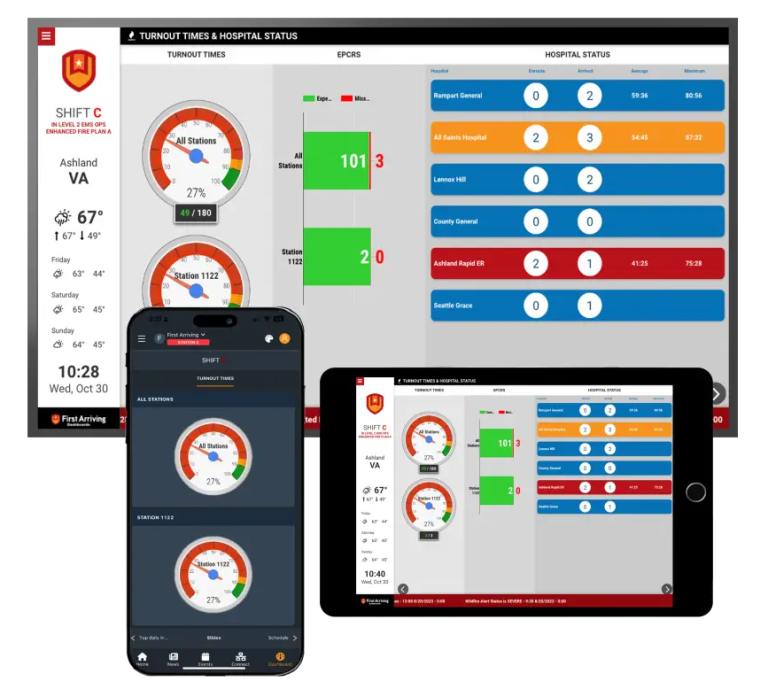
When you are ready to explore what that can look like in practice, First Arriving’s dashboards and applications are built to help departments bring critical information into one clearer operational view. Book a live demo to see how other fire and EMS agencies are using it today.
Frequently asked questions about information overload in fire departments
What does the information overload assessment measure?
The assessment evaluates 10 dimensions of your department’s information environment, including message volume, fragmentation across systems, priority clarity, targeting, and governance. It produces a score of 0–40 and classifies results as manageable (0–13), strained (14–26), or high risk (27–40).
Who should take this assessment?
Fire Chiefs, Deputy Chiefs, Battalion Chiefs, and Command Staff who have visibility into how information moves through their department. It is designed for leaders who manage personnel across multiple stations, shifts, or roles.
How long does the assessment take?
About three minutes. There are 10 questions, each answered on a five-point scale from Never to Almost always.
What should I do after completing the assessment?
Review your top problem areas, which the assessment identifies automatically. Then explore the other articles in this series for practical steps you can take tomorrow, next month, and in the next budget cycle.
Can information overload affect firefighter safety?
When critical information is missed, delayed, or misunderstood, it can affect situational awareness, resource allocation, and command decision-making. Reducing information overload is not just an administrative efficiency issue — it is an operational readiness issue.
Is information overload only a problem for large departments?
No. Departments of all sizes struggle with fragmented information environments. Even smaller departments often rely on multiple platforms for scheduling, training, policy management, and fleet tracking — each with its own login and notification system.