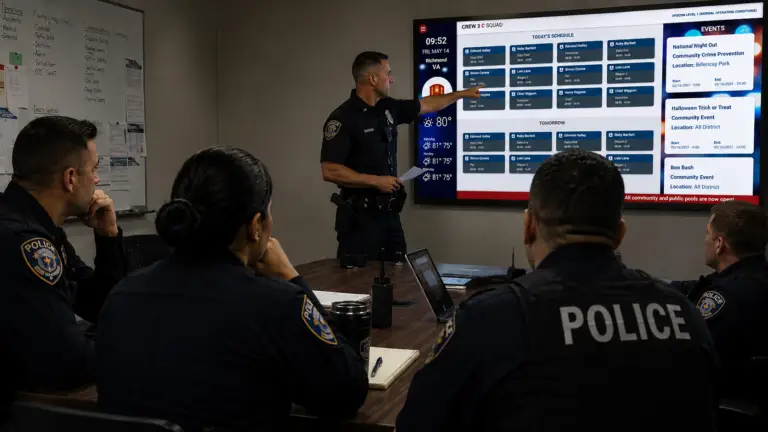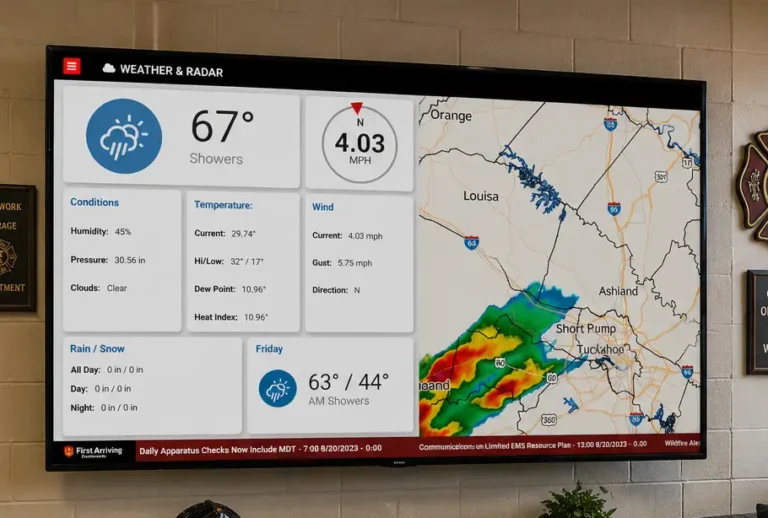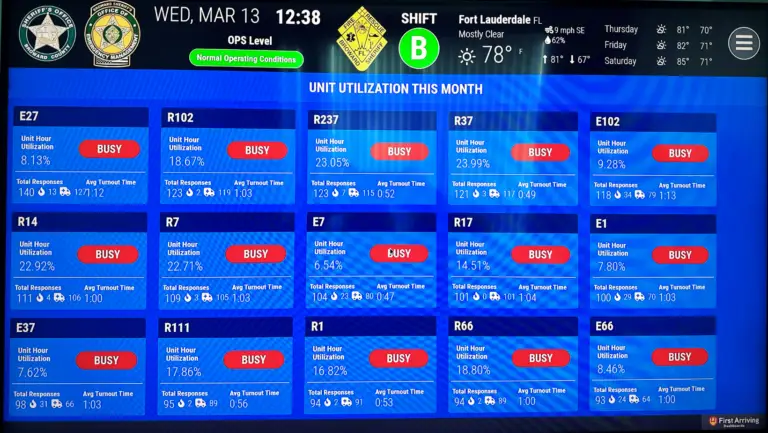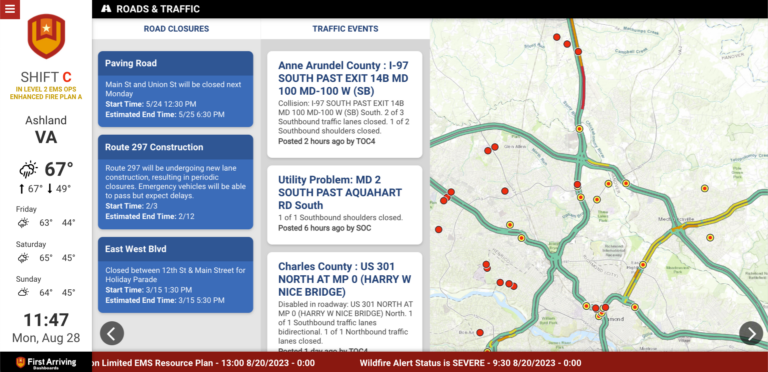
What Is the Real Cost of Fragmented Information in a Fire Department?
When critical information lives across a dozen disconnected systems — CAD alerts in one place, staffing in another, training records in a spreadsheet, equipment status in email — the cost isn’t just inconvenience. It shows up in:
- Missed communications. Emails about hydrant outages, policy changes, or training requirements don’t reach everyone. Shifts come and go without key updates being seen.
- Delayed decisions. Supervisors spend time chasing down data that should be visible at a glance.
- Compliance gaps. Certification expirations get missed when no one has a real-time view of who is due for recertification.
- Response inefficiency. Crews leaving the bay without a clear picture of the incident location, nearby resources, or current road conditions.
None of these have a clean dollar figure, but they compound into meaningful operational drag — and in some cases, safety risk.
What Data Do You Need to Build the Budget Justification?
Before taking a request to city or county leadership, gather baseline data in these four areas:
1. Communication breakdowns — Document the last six months of instances where critical information wasn’t seen or wasn’t acted on. Missed emails about out-of-service hydrants, staffing gaps that went unfilled, training that slipped through — any of these are tangible examples.
2. Administrative time drain — Estimate how many staff-hours per week are spent manually updating spreadsheets, compiling reports, or checking on equipment status across multiple systems. Even a conservative estimate of 5–10 hours per week per administrator translates to significant labor cost over a year.
3. Compliance and accreditation exposure — If your department pursues ISO grading, CFAI accreditation, or other credentialing, missed certifications carry real financial and reputational risk. Quantify what a single lapsed accreditation or failed ISO review would cost.
4. Peer department comparisons — City and county leaders respond to comparables. If neighboring departments are using dashboard technology and can speak to operational improvements, that evidence is powerful. First Arriving has 1,400+ agency customers — ask your sales contact for relevant references.
How to Frame the ROI for City and County Leadership
Budget decision-makers aren’t evaluating a technology product — they’re evaluating a public safety investment. Frame it that way.
Lead with risk reduction. The strongest case isn’t “this is more efficient” — it’s “here’s the operational and compliance risk we’re currently accepting, and here’s how this eliminates it.”
Show the cost of not acting. If your department has experienced a certification lapse, a staffing gap that wasn’t caught in time, or a response delayed by incomplete information, those are real examples to put in front of decision-makers.
Use a total cost of ownership frame. Dashboard platforms are typically subscription-based at a predictable annual cost. Compare that against the accumulated administrative labor cost you documented above.
Cite the procurement path. First Arriving is available through NCSA cooperative procurement, which simplifies acquisition and eliminates the need for a full competitive bid in most jurisdictions.
What Does the Implementation Timeline Look Like?
City and county leaders often have concerns about disruption. A realistic timeline:
- Weeks 1–2: Platform configuration, data integrations, and initial training
- Weeks 3–4: Soft launch with pilot stations; adjustments based on crew feedback
- Month 2+: Full deployment; ongoing content management by designated staff
Most departments report that crews are actively using the system within 30 days.
What Metrics Should You Track After Deployment?
- Email volume reduction — operational emails replaced by dashboard visibility
- Certification compliance rate — percentage of personnel with current certifications before and after
- Administrative hours saved — staff time spent on manual data management
- Crew-reported information clarity — a simple periodic survey asking crews whether they feel better informed at shift start
Frequently Asked Questions
Is a dashboard system a capital or operational expense? Most platforms, including First Arriving, are subscription-based SaaS products budgeted as an operational expense — often easier to approve than a capital request.
Does First Arriving work with our existing CAD and RMS systems? First Arriving integrates with 130+ public safety platforms. Compatibility can be confirmed before any purchase commitment.
How does the NCSA procurement contract work? First Arriving was awarded a National Procurement Contract through NCSA, allowing agencies to purchase through a competitively bid cooperative contract — simplifying procurement in most states.
What’s the typical annual cost? Pricing varies by agency size and feature set. Contact First Arriving for a tailored quote.
Building the case for a dashboard system isn’t about selling technology — it’s about making operational risk visible and showing a measurable path to reducing it.