Why Communication Is Harder in Volunteer Departments
Volunteer fire departments face communication challenges that career departments don’t. With members spread across the community, unpredictable availability, limited administrative staff, and tighter budgets, keeping everyone informed requires more than email chains and bulletin boards.
The structural realities that make volunteer department communication uniquely difficult:
- No guaranteed shift overlap. In a career department, there’s always a crew in the station to receive information in person. In a volunteer department, information has to reach people wherever they are.
- Lean administrative infrastructure. Most volunteer departments don’t have full-time administrative staff. Manual communication processes consume time that nobody has.
- Member retention pressure. Volunteer numbers nationally are declining. Departments that feel disorganized struggle to retain people. Communication quality is directly connected to culture.
- Budget constraints. Solutions that work for large career departments may not be accessible for a 30-person volunteer company.
1. Replacing Email Chains with Station Displays That Speak for Themselves
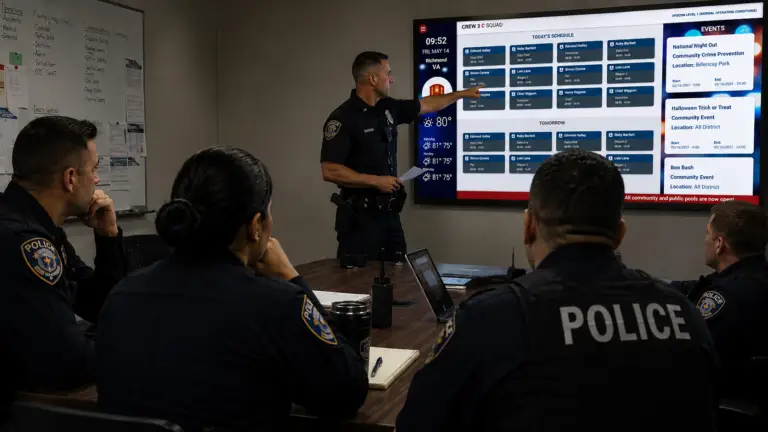
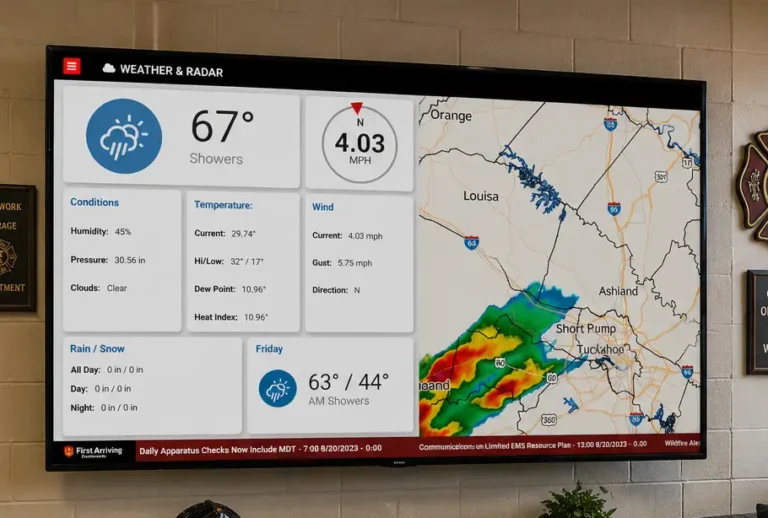
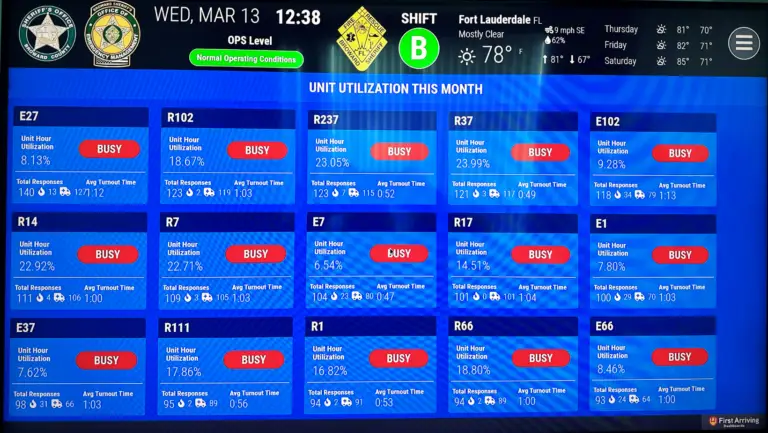
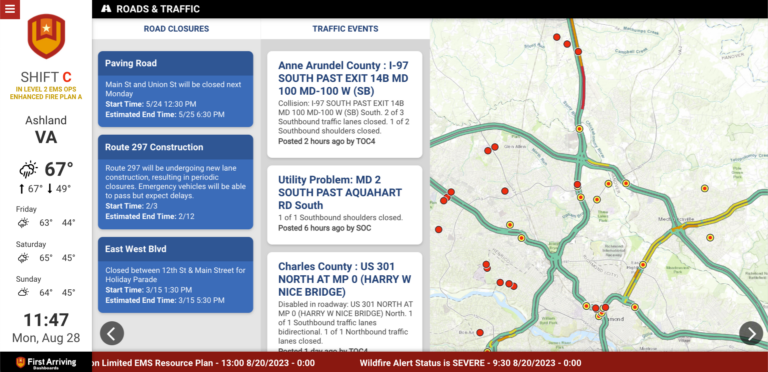
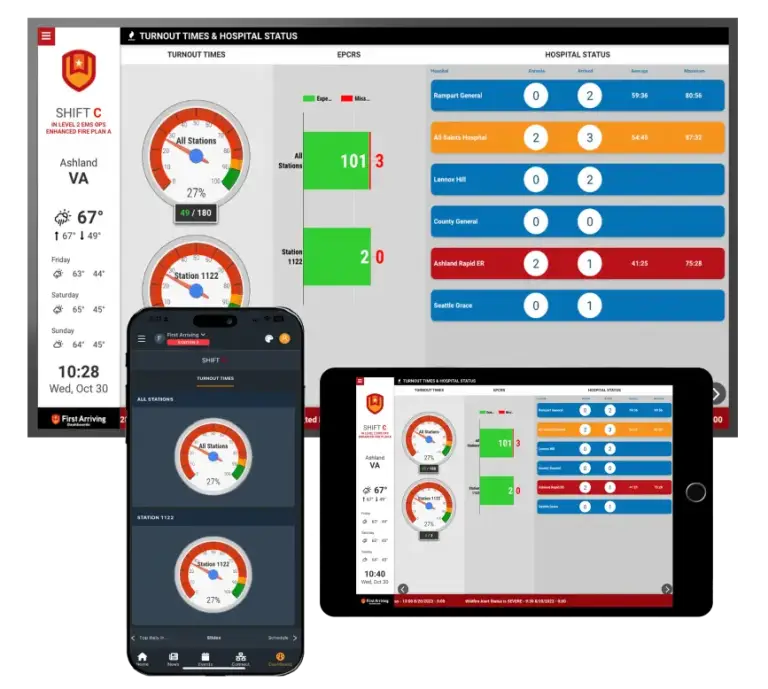
For members who respond to the station, the information environment in the building matters enormously. Volunteer departments are deploying digital dashboard displays in apparatus bays, day rooms, and meeting spaces showing:
- Upcoming training dates and requirements — members see what’s coming when they walk in
- Active member certifications and upcoming expirations — visible accountability without anyone having to ask
- Upcoming events, duty assignments, and announcements — replacing the paper bulletin board with something that updates automatically
- Equipment status and apparatus readiness — so responders arriving for a call know what’s available
The key difference from a digital sign: these displays pull live data from the systems the department already uses, so someone doesn’t have to manually update a slideshow every week.
2. Using Mobile Access to Reach Members Where They Are
Members who respond from home, work, or elsewhere in the community need information too. Mobile access to the department’s operational picture closes that gap. Volunteer departments use mobile platforms to give members access to:
- Training calendars and assignment reminders accessible from their phone
- Department announcements and policy updates they can read on their own time
- Required acknowledgements — when a new SOP is released, members can confirm they’ve read it from anywhere, and the record is captured automatically
- Staffing visibility — knowing which shifts have vacancies allows members to pick up coverage without a phone tree
Members who feel kept in the loop — who don’t have to show up to the station to know what’s happening — are more likely to stay engaged.
3. Automating Certification Reminders Instead of Relying on One Person
In many volunteer departments, one training officer carries the entire burden of tracking who is current on what. When that person steps back or gets busy, certifications fall through the cracks.
Dashboard-based certification tracking distributes that visibility. When certification data feeds into a dashboard display, everyone can see the current state — not just the training officer.
- Creates self-monitoring — members see their own upcoming expirations on department displays or their mobile view
- Reduces administrative load — the training officer doesn’t have to send individual reminder emails
- Creates accountability without confrontation — a name appearing as “certification expiring” is a natural, non-adversarial prompt to act
4. Simplifying Duty Scheduling and Vacancy Notifications
Staffing a volunteer department is an ongoing coordination challenge. Departments are solving this by surfacing scheduling information on dashboards in ways that make vacancies obvious and easy to fill:
- Shift boards on station displays show at a glance who is scheduled and where gaps exist
- Integration with scheduling platforms means the display reflects reality without anyone updating it manually
- On-call and trade visibility — members can see the current staffing picture and step up when needed, without the department relying on a single person to coordinate every gap
5. Building a Consistent Information Culture That Supports Retention
Volunteer departments that retain members at above-average rates consistently report that communication quality is one of the reasons people stay. When members know what’s happening, feel like their time is respected, and can stay connected without being physically present, they’re more likely to maintain their commitment.
A digital platform that keeps information current — without requiring manual effort from stretched volunteers — removes one of the most common friction points in volunteer department life.
What Does This Look Like at a Smaller Department?
Many of First Arriving’s customers are volunteer or combination departments with modest budgets and small administrative footprints. The starting point doesn’t have to be complex: a single screen in the apparatus bay showing upcoming training, equipment status, and department announcements is a meaningful improvement over what most departments have today.
Frequently Asked Questions
Is a dashboard system affordable for a volunteer department on a tight budget? First Arriving pricing scales with agency size. The NCSA cooperative procurement contract also simplifies acquisition for publicly funded departments.
We don’t have an IT person. How complex is this to manage? The system is designed for non-technical administrators. Content updates and module configuration are handled through a web interface that doesn’t require IT support.
How do we get members who don’t come to the station to stay informed? The mobile app and web-based dashboards allow members to access department information from anywhere.
Can this help with member recruitment? A well-organized, modern information environment signals to prospective members that the department is well-run — contributing to the culture that retains members and generates word-of-mouth.
The right communication platform should reduce the burden on the people running it — not add to it. The departments making the most progress are the ones replacing manual, scattered processes with a single operational hub that keeps everyone informed without requiring constant upkeep.