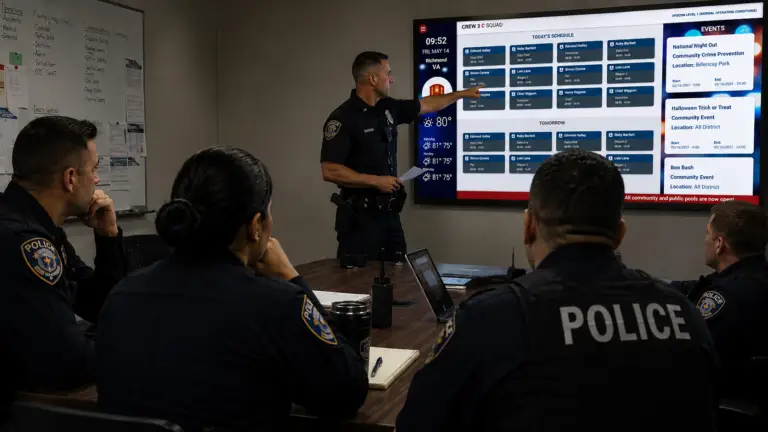
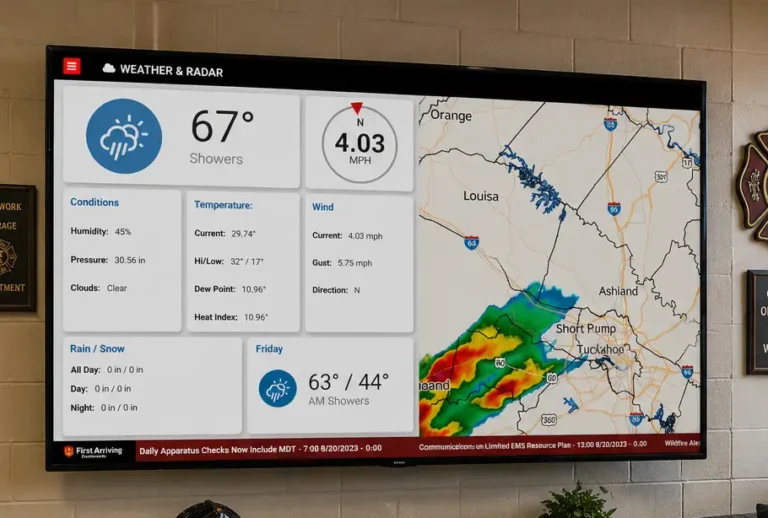
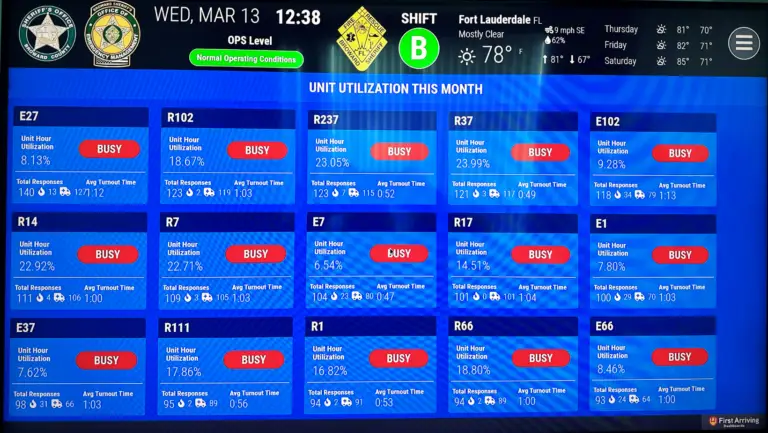
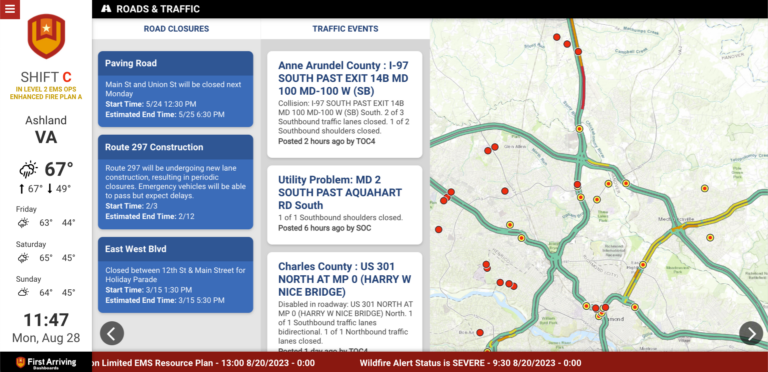
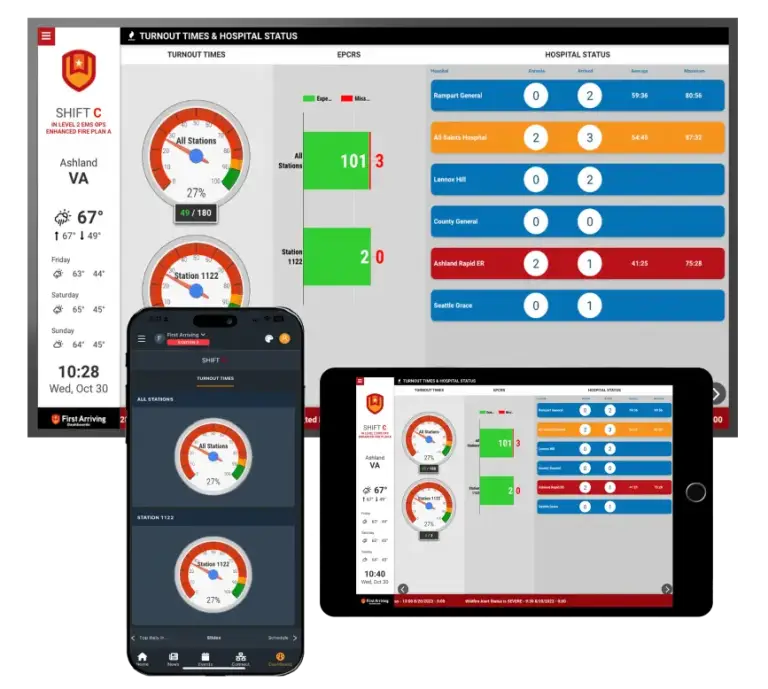
Digital dashboards for public safety agencies improve communication by replacing fragmented, multi-system information environments with a single, always-visible operational view. Instead of relying on emails, text threads, bulletin boards and verbal relay at shift change, agencies can surface critical updates — staffing, CAD data, active incidents, certification status, weather alerts — on screens in stations, briefing rooms, command centers and mobile devices simultaneously.
The result is faster awareness, fewer missed updates and a shared operational picture across every shift, station and role.
What communication problems do public safety agencies face without digital dashboards?
Without a centralized display, information in fire departments, police departments and EMS agencies typically travels through several disconnected channels at once:
- Dispatch comes through CAD, but staffing lives in a separate scheduling system
- Training deadlines are tracked in an LMS that most personnel never log into proactively
- Policy updates go out by email, with no reliable way to confirm receipt
- Shift commanders relay critical briefing information verbally — but only to the personnel in the room
This creates inconsistency across shifts. Night shift may start with a different operational picture than day shift. Personnel who arrive late miss briefing updates. Supervisors spend time confirming whether the right people saw the right message.
How do digital dashboards for public safety agencies fix this?
A well-configured digital dashboard for public safety consolidates information from existing systems — CAD, RMS, scheduling, fleet management, training platforms — and displays it continuously on screens personnel can see without logging in anywhere.
Real-time operational visibility: Active incidents, unit status, apparatus availability and staffing levels are visible on station and command displays from the moment a shift starts.
Persistent briefing information: Important shift updates stay on screen throughout the tour, not just during a ten-minute briefing window. Personnel who arrive late, come in mid-shift or are deployed to another location can still see current operational priorities.
Policy and acknowledgement tracking: Dashboard platforms like First Arriving allow departments to post policy updates with required acknowledgement steps, creating a documented record that personnel received and confirmed each update.
Cross-shift consistency: Because the dashboard is always on, both incoming and outgoing crews see the same operational picture during shift overlap — reducing the chance that critical information gets lost in the handoff.
What types of information do digital dashboards for public safety agencies display?
The most effective digital dashboards for public safety agencies surface information that directly affects operational decisions:
- Active CAD incidents — call type, location, responding units, elapsed time
- Staffing and unit status — who is on duty, which apparatus is available, what positions are filled
- Weather alerts — severe weather, road conditions, wildfire risk
- Certification and training status — who is current, who is expiring, who needs attention
- Community events and road closures — anything that affects response routes or call volume
- Recognition and personnel updates — birthdays, promotions, retirements, awards
Which agencies benefit most from digital dashboards for public safety?
Any agency operating across multiple shifts, stations or units benefits from centralized dashboard communication. According to the International Association of Fire Chiefs (IAFC), operational visibility and consistent information sharing are among the top priorities for improving fire service performance. The value is especially high for:
- Multi-station fire departments where personnel are spread across locations and need a shared operational view
- Law enforcement agencies with briefing rooms, substations and patrol units that may not have consistent access to headquarters information
- EMS agencies managing unit availability, hospital diversion and crew deployment across a large geographic area
- Multi-agency EOCs that need to coordinate information across fire, police, EMS and public works simultaneously
Frequently asked questions
Do digital dashboards replace CAD or RMS systems?
No. Public safety dashboards surface information from existing systems — they do not replace them. First Arriving integrates with 130-plus CAD, RMS, scheduling and fleet platforms to bring data into one operational view without replacing the systems of record.
How quickly can a public safety agency get a dashboard operational?
Most First Arriving deployments are operationally active within two to four weeks. The implementation team handles integration setup, configuration and staff orientation.
Can dashboards work across multiple stations or locations?
Yes. Multi-location deployments allow each station to display location-specific content while leadership can see a unified view across all stations from a web-based command dashboard.
Do personnel need to log in to see dashboard information?
No. That is a key difference from email, apps and software portals. Dashboard content is displayed continuously on screens without requiring any login — which is why it is more reliably seen than messages that depend on personnel checking a separate system.
See how First Arriving improves communication for fire, EMS and law enforcement →