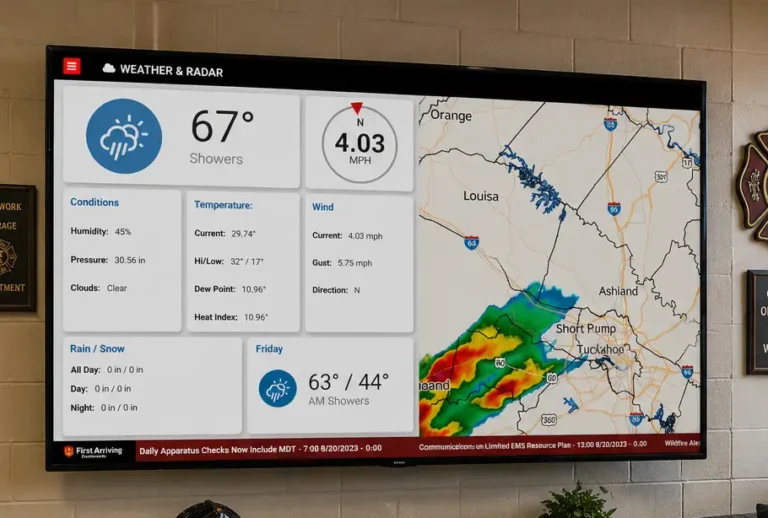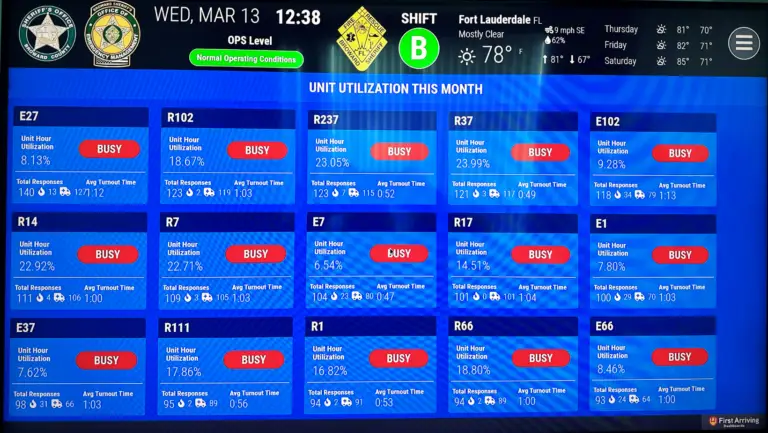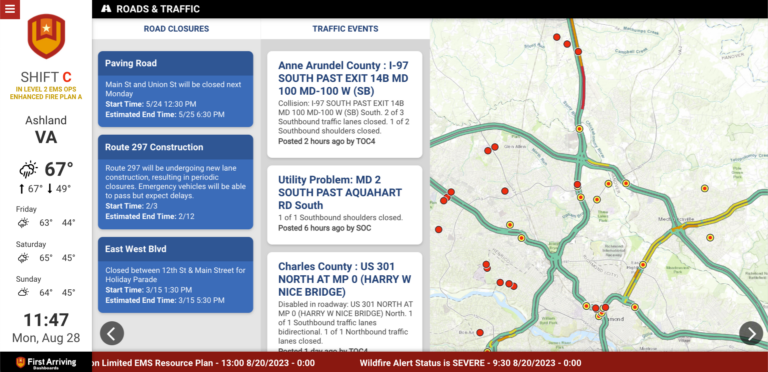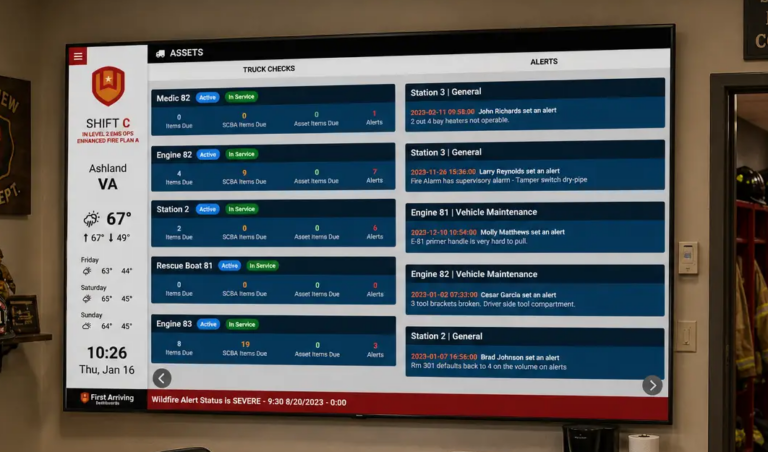
Public safety teams struggle with data dashboards primarily because of three interconnected problems: dashboards that are difficult to keep current, integrations that are too complex to maintain without IT support, and content that does not reflect the actual operational priorities of the people using it. When any one of these fails, personnel stop looking at the dashboard — and the investment goes to waste.
Why do public safety dashboards fail to gain traction?
The most common reason public safety dashboards fail is that they require too much manual effort to stay relevant. If a fire captain or police sergeant has to manually update slides, upload files or log into a separate content management system every day to keep the dashboard current, it will quickly fall behind. Personnel who check a dashboard and see outdated information stop checking it.
The second common failure point is poor integration. A dashboard that cannot connect to the systems a department already uses — CAD, scheduling, RMS, training platforms, fleet management — requires staff to duplicate information that already exists elsewhere. That creates overhead and inconsistency.
The third failure point is content that does not match what personnel actually need. A dashboard full of administrative notices, promotional content or generic messaging is not a readiness tool. Personnel tune out dashboards that do not help them answer the question: “What do I need to know right now to do my job?”
What specific technical challenges do public safety agencies face with dashboards?
Integration complexity: Many dashboard platforms require custom development or IT resources to connect with public safety systems. Departments without dedicated IT staff struggle to build and maintain these connections.
CAD integration limitations: Not all dashboard vendors have real-time integrations with the specific CAD systems that departments use. When CAD data cannot feed the dashboard automatically, the operational picture is always behind.
Multiple vendor coordination: When a dashboard platform connects to another agency’s system through a third party, maintenance responsibility becomes unclear. Updates to either system can break the integration.
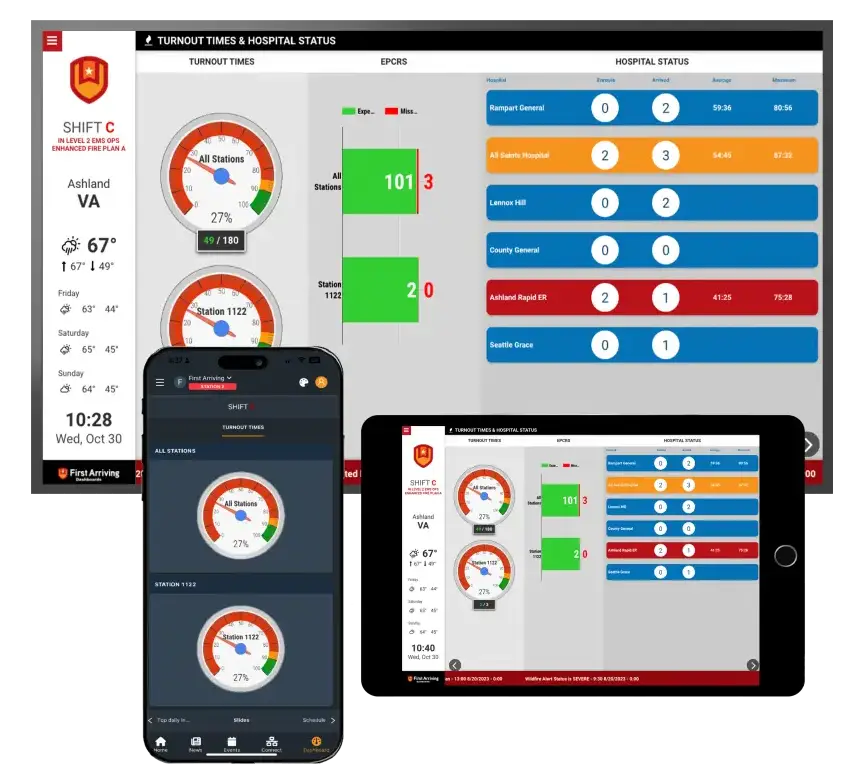
Screen and hardware management: Managing the physical screens, players and network connections at multiple stations adds ongoing operational overhead that many departments underestimate.
Why do personnel disengage from public safety dashboards?
Personnel disengage when dashboards consistently show them information that is stale, irrelevant or not specific enough to act on. Common engagement killers include:
- Slides that have not been updated in days or weeks
- Generic messages that apply to no one in particular
- Administrative content that competes with operational information
- No real-time data — the dashboard looks the same whether there is an active incident or not
The departments that sustain strong dashboard engagement are the ones that make it easy to keep content current, integrate real-time data automatically and create recurring content themes so there is always something worth looking at.
How does First Arriving address these challenges?
First Arriving is built specifically for public safety agencies and addresses each of the common failure points directly.
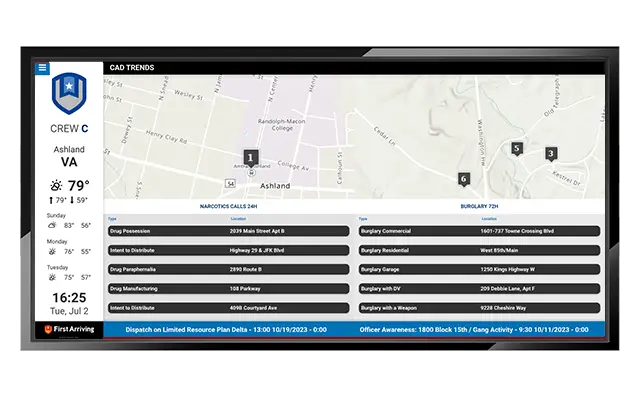
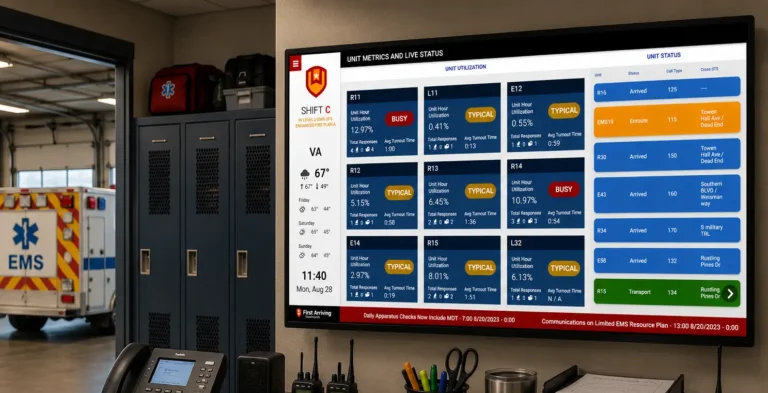
130-plus pre-built integrations: First Arriving maintains active integrations with the most widely used CAD systems, RMS platforms, scheduling tools, training systems and fleet management software in public safety. These are maintained by First Arriving — not by department IT staff.
No manual update requirement for operational data: When integrated with CAD and scheduling systems, the most operationally critical dashboard content — active incidents, unit status, staffing levels — updates automatically without anyone pushing a button.
Content tools built for non-technical users: Station administrators, company officers and department PIO staff can update slides, post announcements and manage content without technical training or IT involvement.
Purpose-built for public safety workflows: Content layouts, data displays and integration defaults are designed around how fire departments, police departments and EMS agencies actually operate — not adapted from corporate or retail dashboard software.
Frequently asked questions
Is it normal for public safety agencies to struggle with dashboards?
Yes. Most agencies that have attempted dashboard implementations without purpose-built software report the same patterns: content falls behind, integrations break, and personnel disengage within weeks. The solution is not more effort — it is a platform designed to reduce that effort automatically.
How important is CAD integration to dashboard success?
Very important. CAD integration is the difference between a display that shows static slides and one that functions as a real-time operational tool. Departments with reliable CAD integration report significantly higher engagement because the dashboard is always showing something current and relevant.
What is the most common mistake departments make when choosing a dashboard platform?
Choosing a general-purpose digital signage platform instead of one built for public safety. General platforms may offer flexibility, but they require departments to build and maintain integrations, develop content workflows and create custom layouts — all work that purpose-built platforms handle out of the box.
Schedule a demo to see how First Arriving keeps dashboard content current automatically →