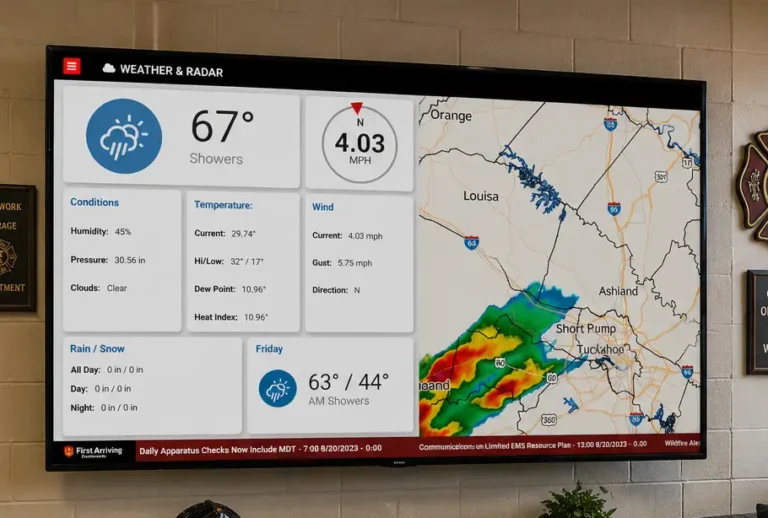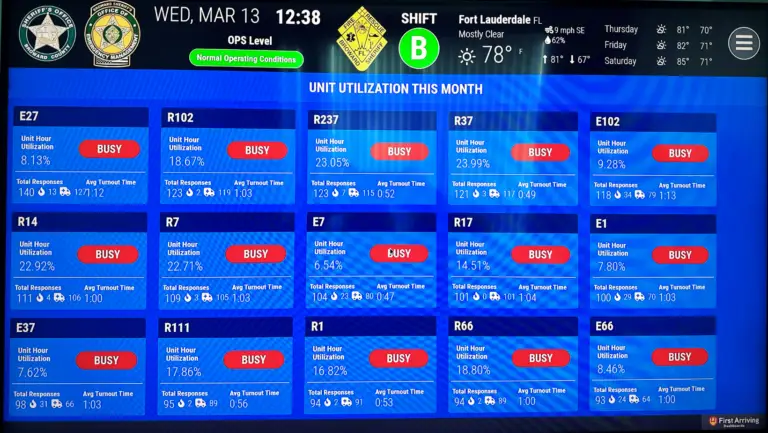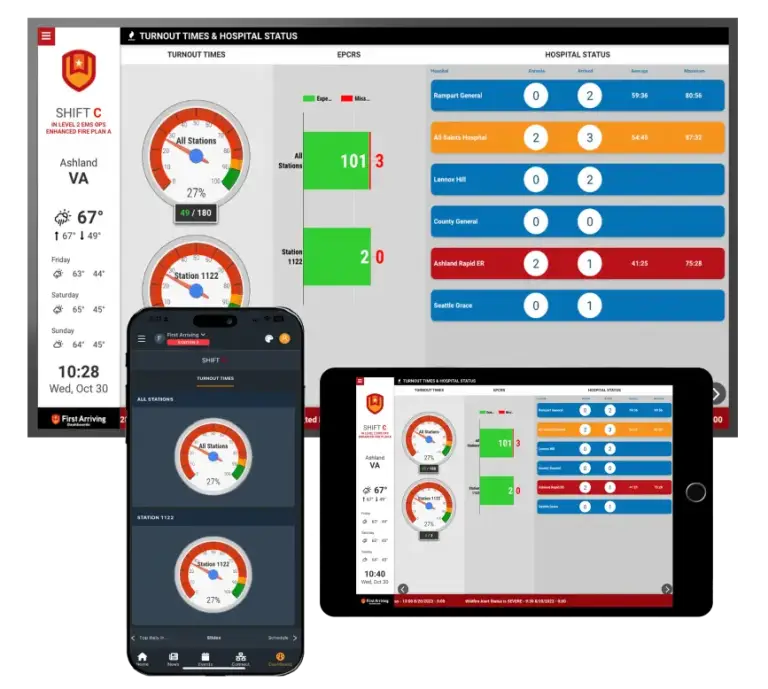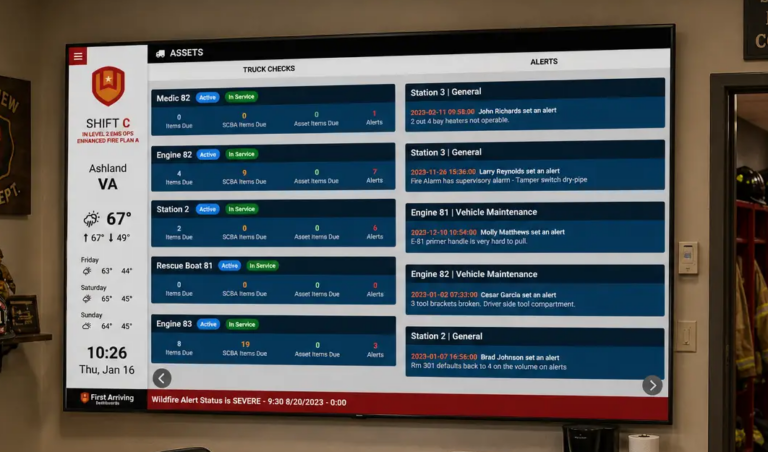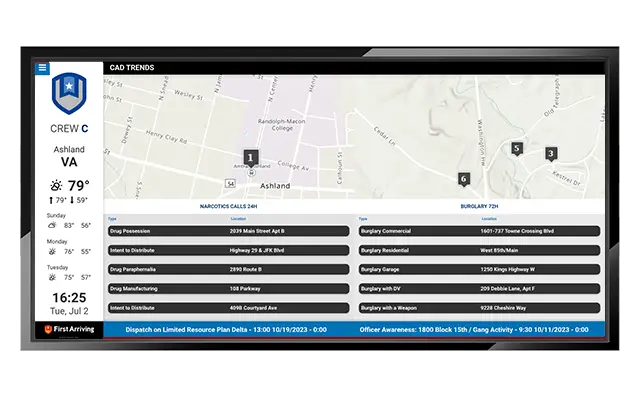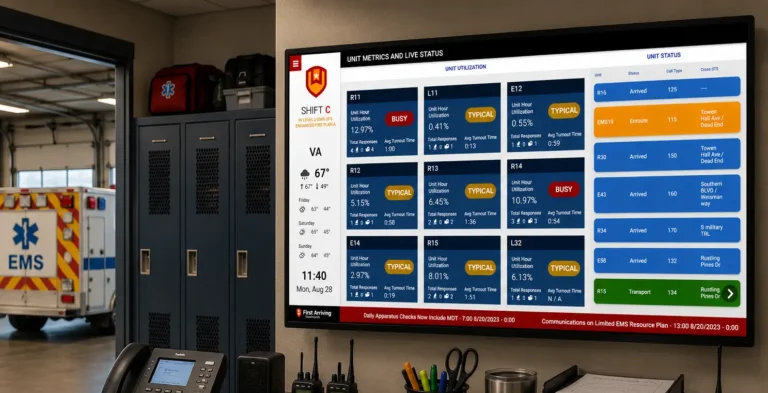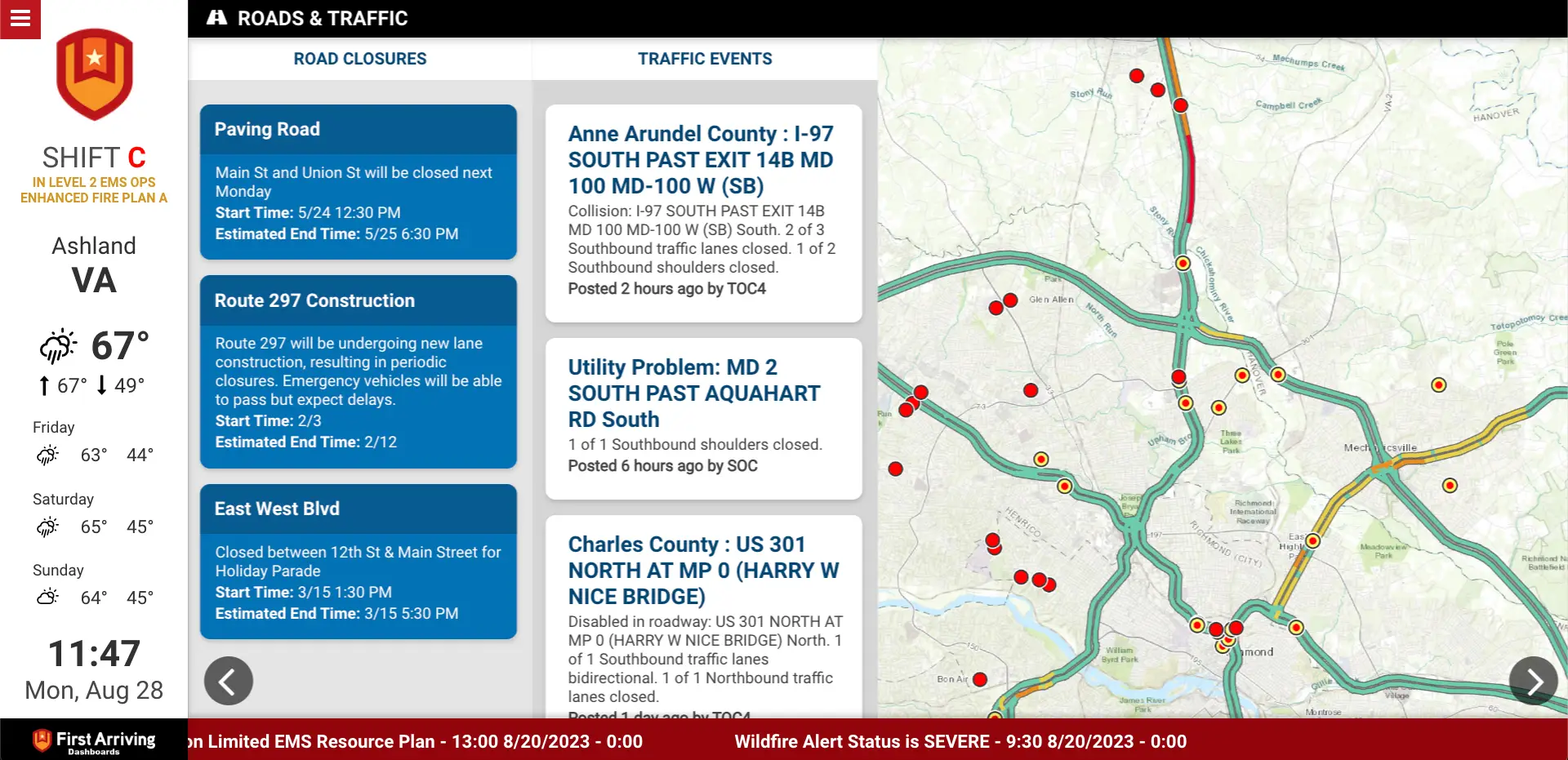
Implementing digital dashboards in emergency services organizations is challenging because the technical, operational and organizational demands hit simultaneously. Leaders must manage system integrations with existing CAD and RMS infrastructure, navigate procurement and IT approval processes, build staff adoption across multiple shifts and stations, and keep content current enough to stay useful — all while running continuous operations that cannot pause for a technology rollout.
Why is dashboard implementation harder in public safety than in other industries?
Public safety agencies face implementation challenges that most corporate or commercial dashboard deployments do not encounter.
24/7 operations with no implementation window: Fire departments, police departments and EMS agencies cannot shut down for a system rollout. Implementation has to happen alongside continuous operations, which means training happens across rotating shifts and adoption builds over weeks rather than days.
Complex integration environment: Public safety agencies rely on systems — CAD, RMS, scheduling platforms, training management tools, fleet software — that are often from different vendors, hosted differently and updated on different cycles. Connecting a dashboard to these systems requires integration work that not all platforms support out of the box.
Distributed workforce: Personnel are spread across stations, substations, patrol vehicles, command centers and field assignments. A dashboard that works at headquarters may not reach the people who most need operational awareness.
Limited IT support: Many public safety agencies, especially in smaller jurisdictions, do not have dedicated IT staff to manage ongoing technical requirements. Implementation and maintenance responsibility often falls to administrators or chiefs who are already managing operational workloads.
Budget and procurement constraints: Public safety purchases often require formal procurement processes, competitive bidding, city or county approval and multi-year budget planning. Even when leadership wants to move quickly, the process takes time.
What are the most common implementation pitfalls?
Underestimating integration complexity. Leaders often assume that connecting a dashboard to existing systems will be straightforward. In practice, integration depends on the specific CAD or RMS platform, the hosting environment and the vendor’s existing integration library. Systems that seemed simple to connect can require significant configuration work.
Choosing a general-purpose platform. Dashboard platforms built for retail, corporate or hospitality environments can be adapted for public safety, but that adaptation typically requires custom development, ongoing maintenance and workarounds that purpose-built platforms do not need.
Failing to plan for content ownership. A dashboard is only useful if someone is responsible for keeping it current. Departments that do not assign clear content ownership before go-live quickly see content fall behind, engagement drop and the platform lose credibility with personnel.
Rushing deployment without staff buy-in. Personnel who were not involved in the selection process and who receive no explanation of how the dashboard supports their work are more likely to ignore it. Adoption depends on supervisors and company officers who model dashboard use and reinforce it in daily operations.
What does a successful emergency services dashboard implementation look like?
Successful implementations typically share a few common characteristics.
Integration-first planning: The most critical integrations — CAD, scheduling, staffing — are identified and configured before go-live, so the dashboard has real-time operational data from day one.
Phased rollout: Content and integrations are added incrementally. The platform launches with the highest-value data and expands from there, rather than trying to configure everything at once.
Clear content ownership: A specific person or role is assigned responsibility for the dashboard in each station or location. Content workflows are established before launch.
Supervisor adoption: Company officers, shift commanders and patrol supervisors make the dashboard part of their daily routine — reviewing it at shift change, directing personnel to it during briefings, and updating it when operational conditions change.
Vendor support: The implementation team from the platform vendor is actively involved in integration setup, training and the first weeks of operation. Departments that try to implement entirely on their own typically encounter more friction.
How does First Arriving reduce implementation complexity?
First Arriving is designed to reduce the specific implementation challenges that public safety agencies face.
Pre-built integrations with 130-plus public safety platforms — including the most widely used CAD systems, scheduling tools and training platforms — eliminate the need for custom integration development. The implementation team handles configuration, maps data fields to the department’s specific setup and manages the technical work that would otherwise fall on agency IT staff or administrators.
Most First Arriving deployments are operationally active within two to four weeks. The company works with departments to configure content, train staff and ensure integrations are stable before leaving the team to manage the platform independently.
Frequently asked questions
How long does it typically take to implement a public safety dashboard?
Most First Arriving deployments are operationally active within two to four weeks, depending on integration complexity and the number of locations. Larger multi-agency or multi-station deployments may take longer.
Do we need IT staff to implement a dashboard?
Not necessarily. First Arriving’s implementation team handles the technical integration work. Departments without dedicated IT staff can implement successfully when the platform vendor manages the technical configuration.
What is the biggest factor in whether a dashboard implementation succeeds?
Content ownership and supervisor adoption. Departments where a specific person is responsible for keeping the dashboard current and where supervisors actively use it in daily operations consistently report stronger outcomes than those where the dashboard is set up but not actively managed.
Talk to First Arriving about your department’s implementation questions →