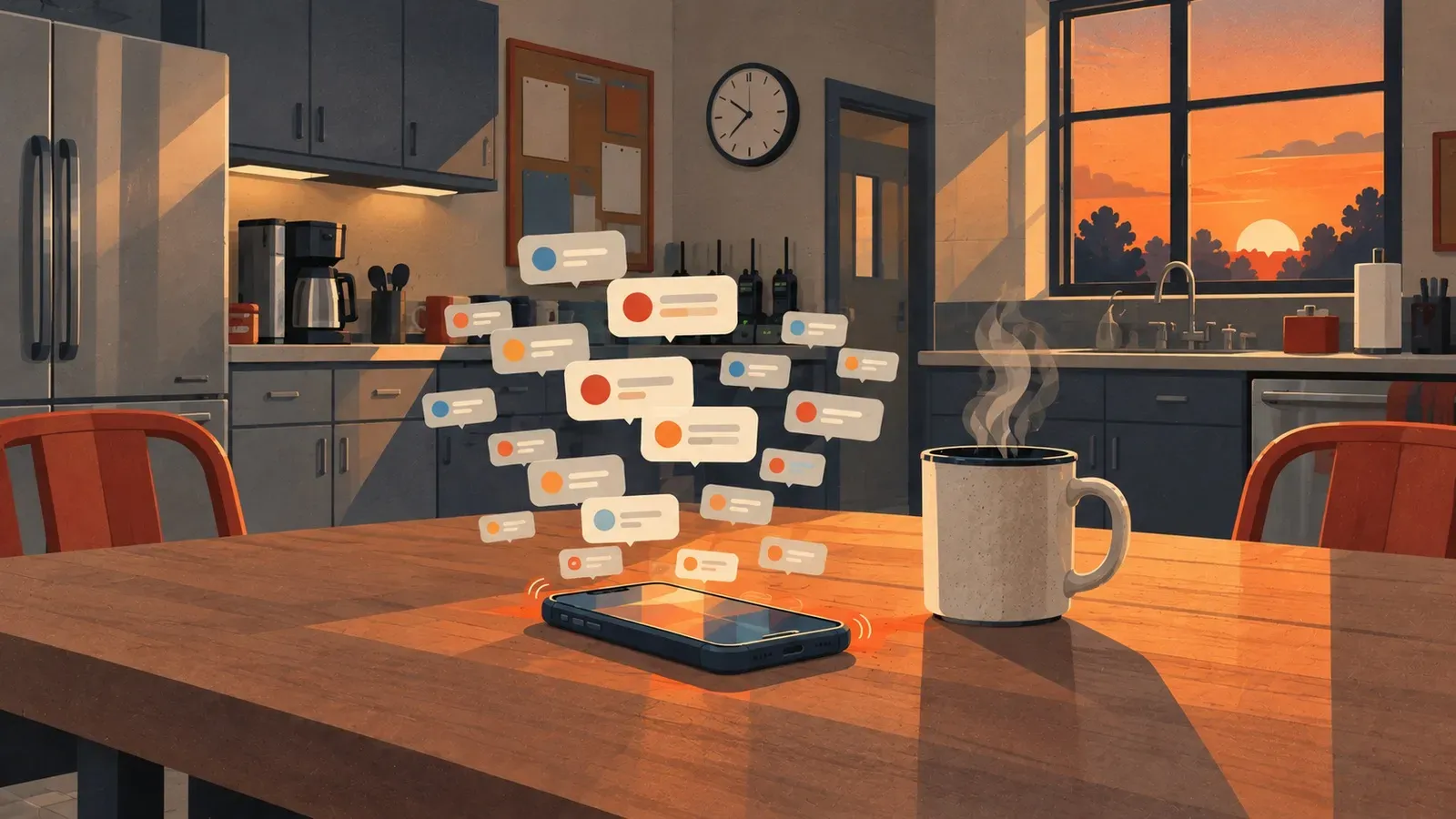
One Message, Too Many Channels
Too many channels make public safety communication less reliable, not more, because members can only keep up with one or two and everyone assumes another channel covered it. The fix is to retire channels nobody checks, give each remaining channel a clear job, and name one channel of record for anything that must reach every member.

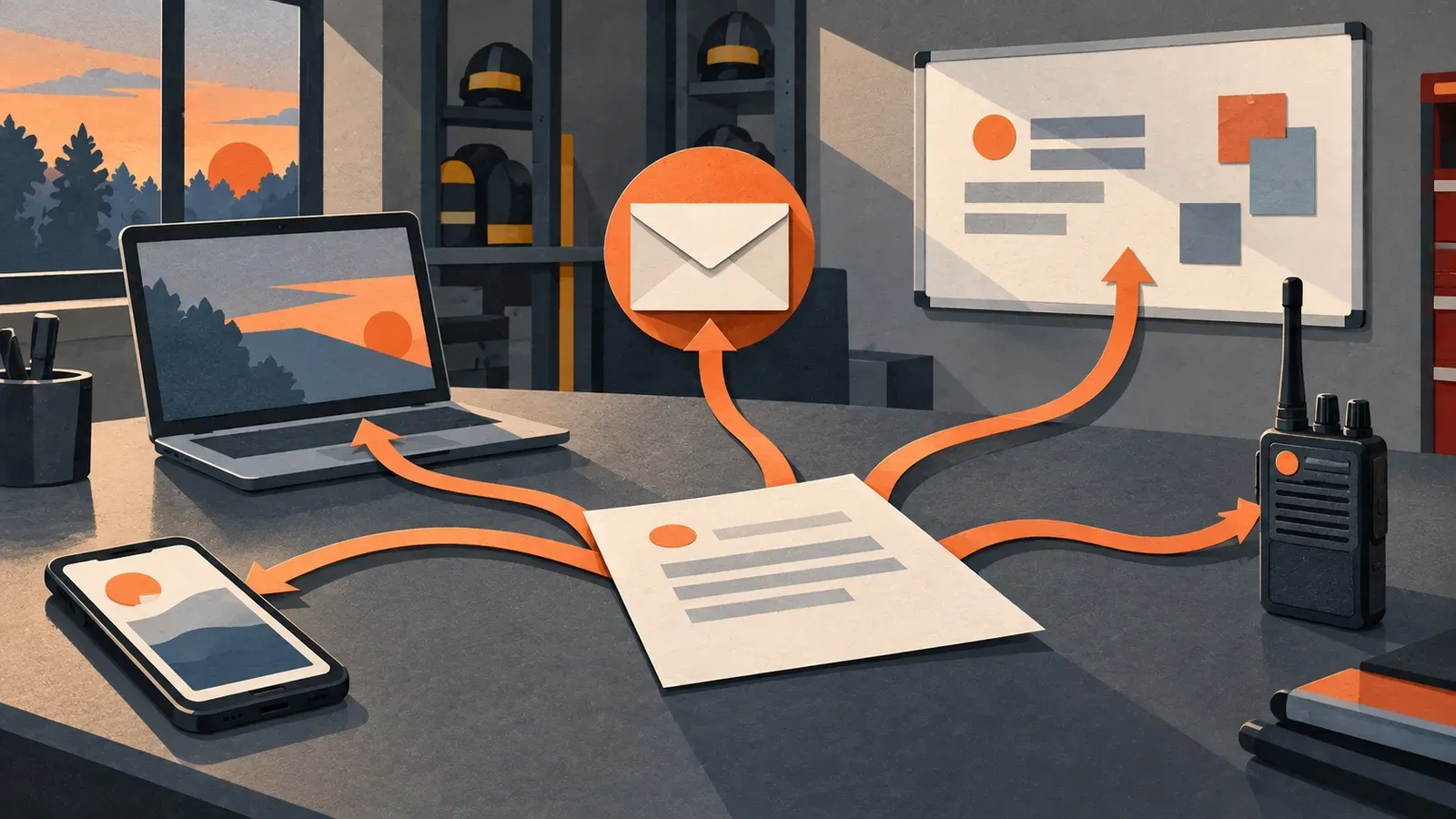
Text, app, email, bulletin board, in-person briefing. More channels does not mean better communication. It usually means worse.
Most public safety agencies do not have too few ways to communicate. They have too many.
Text messages for the officers. An app the department adopted two years ago that half the roster still has not opened. Email for anything official. A bulletin board by the report room. In-person briefings at roll call or shift change. And somewhere in that mix, probably a group chat nobody remembers agreeing to join.
Each of those channels made sense on its own the day it was added. The problem is that nobody ever decided which one is actually in charge. When every channel is available and none of them is the channel of record, important information does not get delivered more reliably because it has more paths to travel. It gets delivered less reliably, because everyone assumes someone else's channel already covered it.
Notification Fatigue Is a Real Cost
Add up every channel a member is expected to monitor and you get a number higher than most departments realize. A text thread, an app with push notifications, an email inbox, a bulletin board they have to physically walk past and a briefing they have to be present for. That is five places a piece of information could live, and five habits a member has to maintain to see everything.
People do not maintain five habits. They maintain one or two and let the rest slide. That is a reasonable response to being asked to monitor more channels than anyone can realistically track. When a member mutes the group text because it is mostly chatter, or stops checking the app because half the notifications are low-value, they are protecting their attention from noise, and your department's important information is getting filtered out along with it.
This is why adding a new channel rarely solves the underlying problem. A new app on top of the text thread, the email and the board does not simplify anything. It gives members a sixth thing to check, and it teaches them, correctly, that even more of what shows up in any given channel is not worth their time.
Match the Message to the Channel
No channel is wrong in itself. Each one is good at something specific. The mistake is using them interchangeably instead of deliberately.
- A text or app notification suits something short, time-sensitive and personal, the kind of thing a member needs to see in the next few minutes, not the next few days.
- Email works for anything that benefits from detail, documentation and a permanent record, like a policy change or a benefits update. It is a poor fit for anything urgent, since most people do not treat their inbox as something to check immediately.
- A bulletin board or station screen suits information that benefits from being seen repeatedly by anyone who walks past. But it depends on physical presence, so anything that must reach someone who is not at the station cannot rely on it alone.
- An in-person briefing is unmatched for anything that benefits from discussion, questions and tone, but it only reaches whoever is in the room that day.
Any one of these channels is fine on its own. The failure mode is using all of them for everything, so that an urgent safety notice gets the same treatment as a reminder about a social event, and members can no longer tell from the channel alone how seriously to take a me
Pick a Channel of Record
Every agency needs one answer to a simple question: when something absolutely must reach every member, where does it live? Not where it gets mentioned first, and not where it gets discussed. Where it lives, in a form someone can go back and check.
That channel of record does not have to be fancy. It has to be consistent, and it has to be the answer every time, not just when it feels convenient for a particular message. If the channel of record changes depending on who is sending that week, members will stop being able to predict where to look. A channel nobody can predict gets checked by nobody in particular.
Everything else, the text threads, the hallway conversations, the quick mentions at roll call, can still exist. They are useful for coordination and for reinforcing something that already lives in the channel of record. What they cannot do is replace it. If a piece of information only ever existed in a text thread that half the department muted, it does not matter how many people were technically sent the message. It was not actually delivered.
Reduce Before You Add
If your department is dealing with missed information right now, the instinct is usually to add something: a new app, a new group, a new reminder system. Resist that instinct until you have looked honestly at what you already have.
Count the channels currently in use. Ask which ones are actually being checked, and by whom. You will likely find that some channels have quietly died, still technically active but ignored by most of the roster, while officers keep sending information into them out of habit. Retire those before adding anything new. A department with six channels, three of which nobody trusts, does not get better by becoming a department with seven. It gets better by becoming a department with three that everyone actually uses.
Once you know what survives that cut:
- Assign each remaining channel a clear job based on what it is actually good at.
- Designate one as the channel of record for anything that must reach everyone.
- Communicate that structure to the whole roster so people know what to expect from each one.
Fewer Channels, Used on Purpose
The goal is fewer places a member has to check, with better odds that anything important actually gets through. A department with three channels used deliberately, each doing the job it is suited for, will out-communicate a department with six channels used out of habit every time.
If you cannot say, without hesitating, which channel in your department is the one place everyone checks for anything that truly matters, you do not have too few tools. You have too many, and none of them is doing the job.
At First Arriving, we designed our platform to serve as that one place: the same announcements, schedules and documents on station TVs, the desktop and the mobile app, with required acknowledgments for the messages that must reach everyone.
Frequently asked questions
What is a channel of record?
It is the one place where information that must reach every member lives, in a form people can go back and check. Other channels can mention or reinforce that information but cannot replace it.
Should a department add a new app to fix missed messages?
Not before auditing the channels it already has. Adding a channel on top of ones nobody checks gives members one more thing to monitor and usually makes the problem worse.
Which channel is best for urgent information?
Short, time-sensitive, personal messages suit a text or app notification. Email is better for detail and a permanent record, and a station board or screen only reaches people who are physically present.
About the author
Dave Iannone
Founder & Chief Product Officer
Founder of Firehouse.com and Firefighter Nation, a veteran entrepreneur and lifelong first responder and leader.